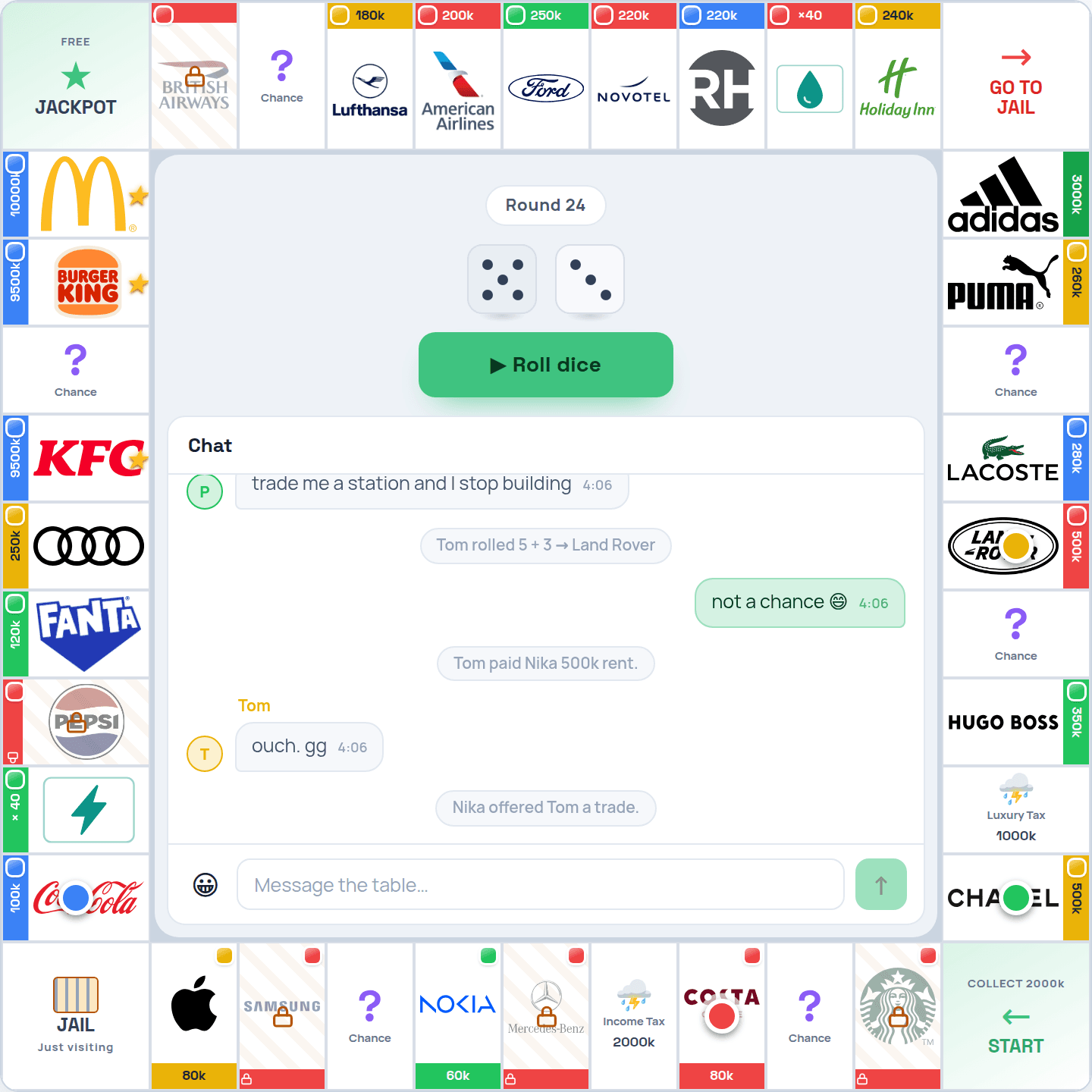
Your first game is now taught, not guessed
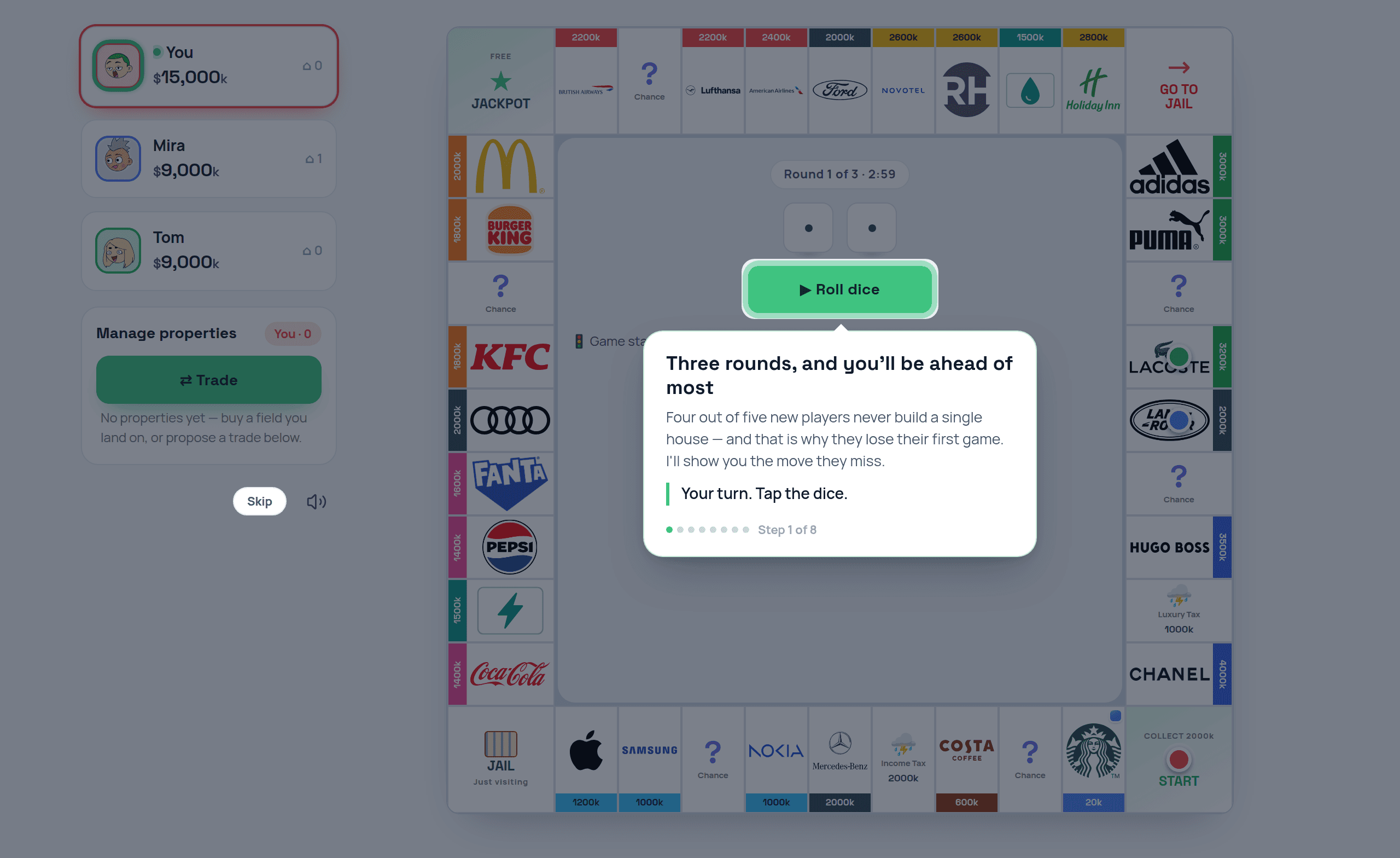
New players are dropped into a short scripted game before the lobby, with the board dimmed and one control lit at a time: roll, buy, complete a set, build, decline into an auction. It is the real engine, not a slideshow — and here is what the first week of it measured.
In plain words
A first game of opolyx used to begin with a board, a clock, and no explanation. That is fine if you already know Monopoly, and not fine otherwise — and the data was blunt about which. The things the game hands you, newcomers do: about two thirds buy a property in their first game. The things you have to discover, they do not: building a house, the move that actually wins games, went from about a fifth of first games to nearly half by a player's third. Over half of first games contained a turn that simply ran out of time, which is what it looks like when somebody does not know what is being asked of them.
So a new account now starts in a scripted three-round game before it ever sees the lobby. The board dims, one control lights up, and a card explains what that control does and why it matters. It walks the whole chain: roll, buy the square you land on, complete a colour set, put up your first house, and decline a purchase so you can see what an auction is. You can leave at any point with a single button.
For the technically curious
Nothing in it is faked. It is the same engine that runs every other game on the site, with the dice given a fixed script so the lesson always lands in the same order, and the opponents set to the gentlest bots available. Because it is real, the things it teaches transfer exactly: the trade you send is a real trade, the house you build is a real house, and the auction really opens at the square's own asking price. That last detail is worth stating, because the card used to get it wrong — it promised you could pick the square up cheaper, when in fact bidding starts at the list price and only climbs. It says so correctly now.
The honest summary of the first week is that delivery works and the offer is what struggles. Four out of five new registrations reach it, which means the plumbing is sound. About two thirds then decline it, at a median of nine seconds — long enough to read the card and turn it down, not a mis-tap. One change has moved that number: the tutorial used to open with a welcome card asking you to press Start, and seven in ten never pressed it, so the card is gone and the first beat now begins immediately with the dice lit. That took skipping from about 69% to about 64%.
| Share who skipped | |
|---|---|
| With a welcome card first | 69.1% |
| Starting straight on the first beat | 63.8% |
| Ran it to the win | 11.7% |
Most of the work after launch was not the script but the phone. Two players reported the same shape of problem from a small screen: the coach card was standing on the control it was pointing at. The card is measured and positioned every frame, and between beats the library that draws it hides the card — at which point a hidden element reports a size of zero at the top-left corner of the screen, so the arithmetic concluded that everything overlapped it and scrolled the board out of view. Separately, on the build beat the page simply ended before the card did, so the "+" could not be reached at all. Both are fixed, and the page now reserves exactly the band the card occupies.