Setting up the board…
Shuffling cards and seating players
Setting up the board…
Shuffling cards and seating players
Buy properties, charge rent, and bankrupt your rivals. A game ends the moment only one solvent player is left — or when the round cap is hit, in which case the richest player by net worth wins. opolyx is free-to-play; in-game money has no cash value.
Every game runs on the same 40-square board and the same rules. A mode just tunes the economy and a few toggles. Classic is the full-length game; Blitz is Classic stopped at 25 rounds, where the richest player wins; Speed is faster and adds a third die plus uneven building and a mortgage timer; Team plays Classic's economy with the table split into two allied sides.
| The modes at a glance | Classic | Blitz | Speed | Team |
|---|---|---|---|---|
| Starting cash | 15,000 | 15,000 | 15,000 | 15,000 |
| Players | 2–6 | 2–6 | 2–6 | 4 / 6 |
| Time per turn | ~75s | ~60s | ~45s | ~75s |
| Rent tax starts | 100 | 100 | 40 | 100 |
| Round cap | 500 | 25 | 300 | 500 |
| Third die | — | — | ✓ (7+) | — |
| Uneven building | — | — | ✓ | — |
| Mortgage | ∞ | ∞ | 10 | ∞ |
Team mode splits the table into two even sides — 2×2 with four players, 3×3 with six — playing on Classic's economy. You pick it when you create the room, and the seat count snaps to four or six so the sides stay balanced.
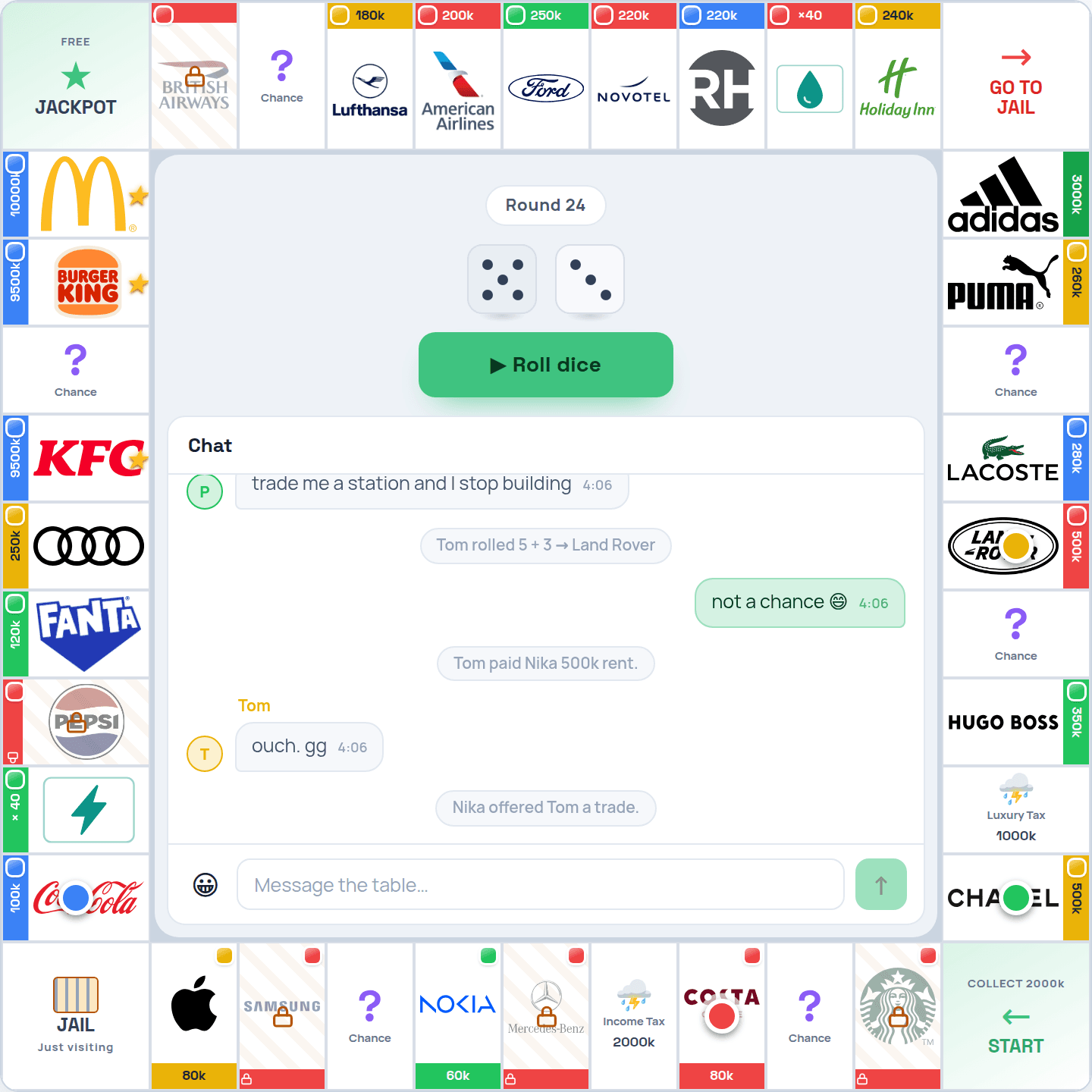
The board is 40 squares in a loop. You always start on Start (square 0) and move clockwise; passing Start pays a 2000 salary, and stopping exactly on it pays that salary plus a 1000 landing bonus.
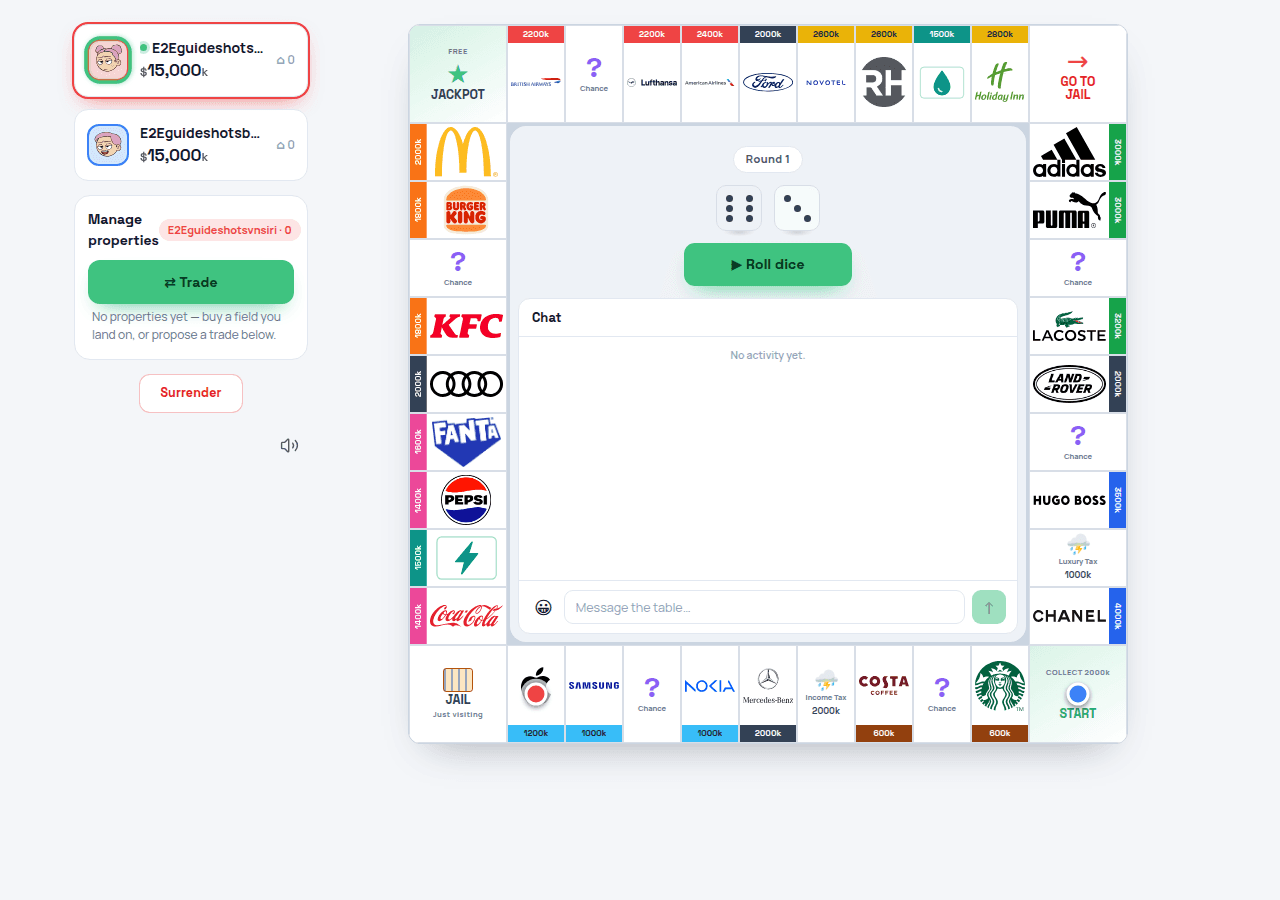
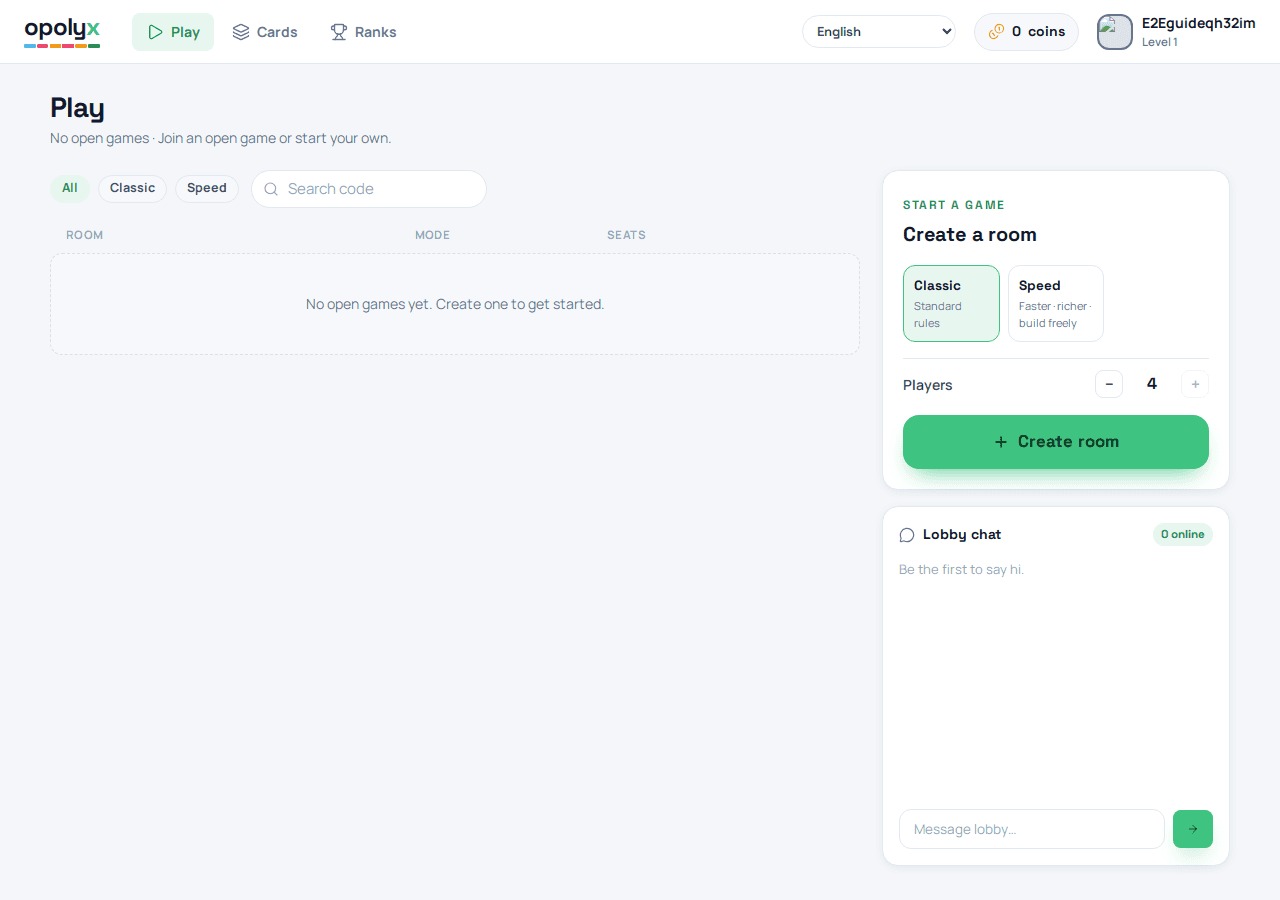
Create a game from the lobby (pick Blitz, Classic, Speed or Team and the number of seats), or join one that is waiting. A game needs 2–6 players — Team snaps that to 4 or 6 so the sides are even — and starts when the creator presses Start.
On your turn you roll two dice and move that many squares, then resolve whatever you land on. Your turn then ends automatically — there is no separate ‘end turn’ button.
What happens depends on the square you finish on:
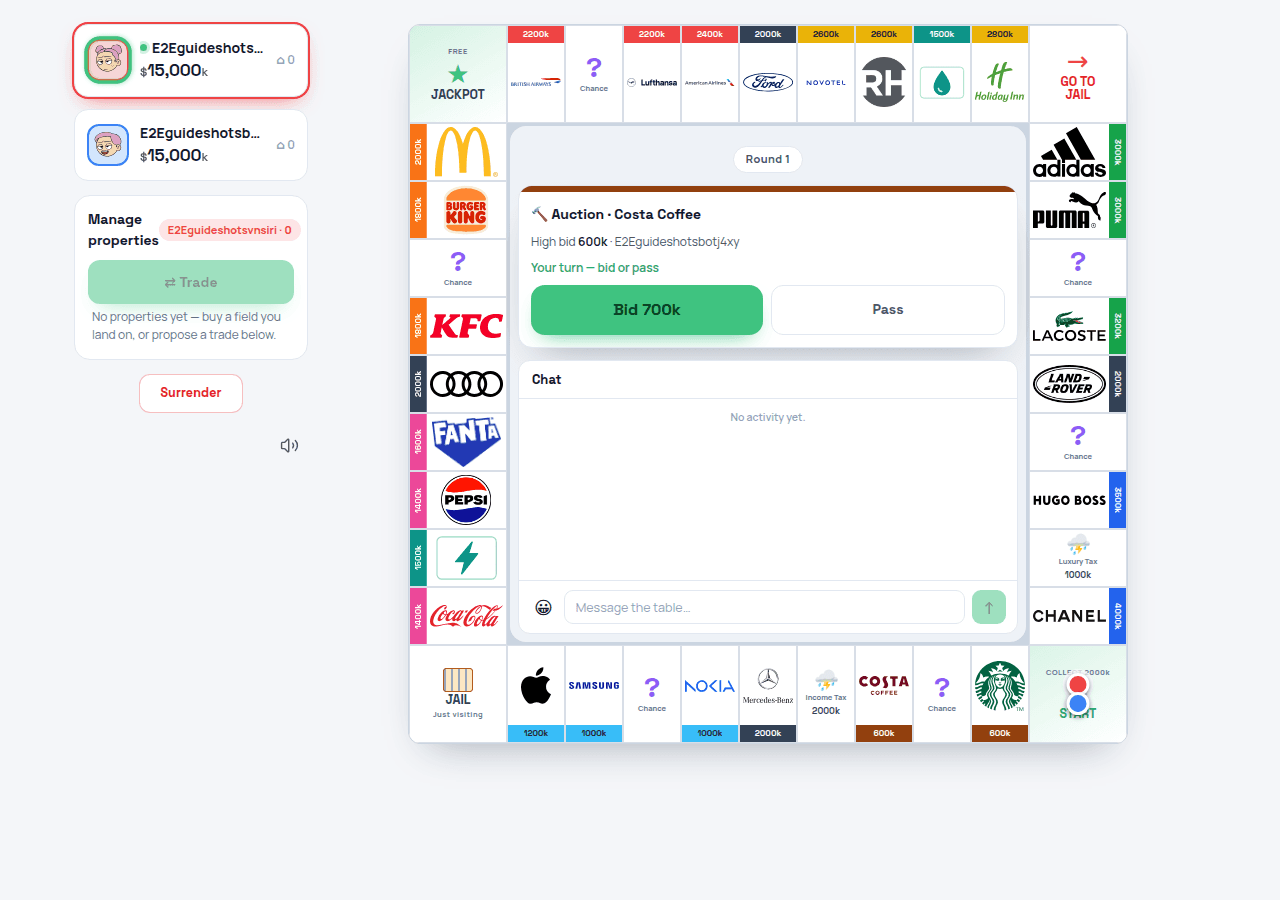
Land on an unowned property and you may buy it for its list price. Buy it and it is yours, unmortgaged, with no buildings. Decline and it is auctioned to everyone — so a property is never simply skipped.
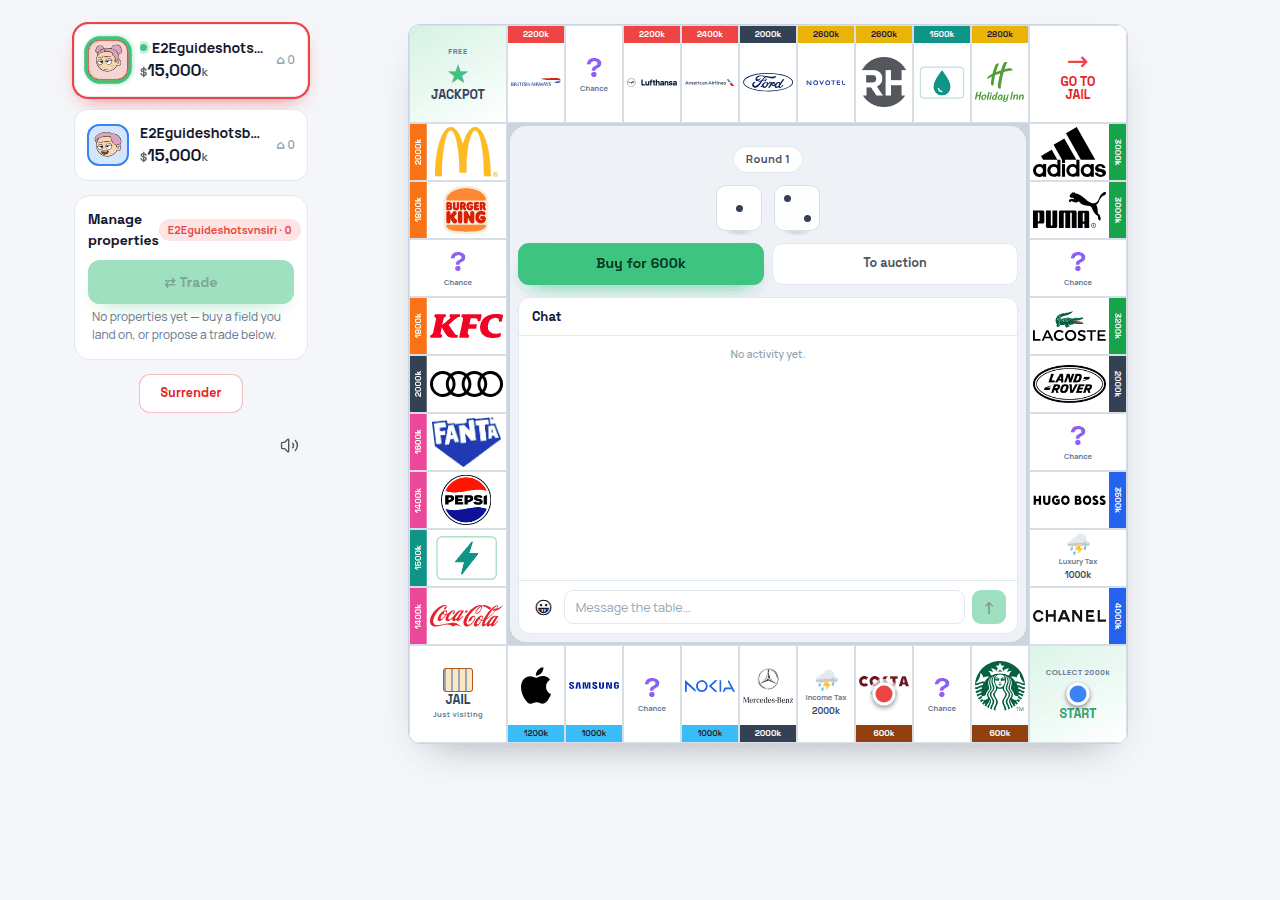
When a property is declined it goes to a turn-based auction: bidding moves around the table in seat order, starting with the player after the one who declined — the decliner bids last.
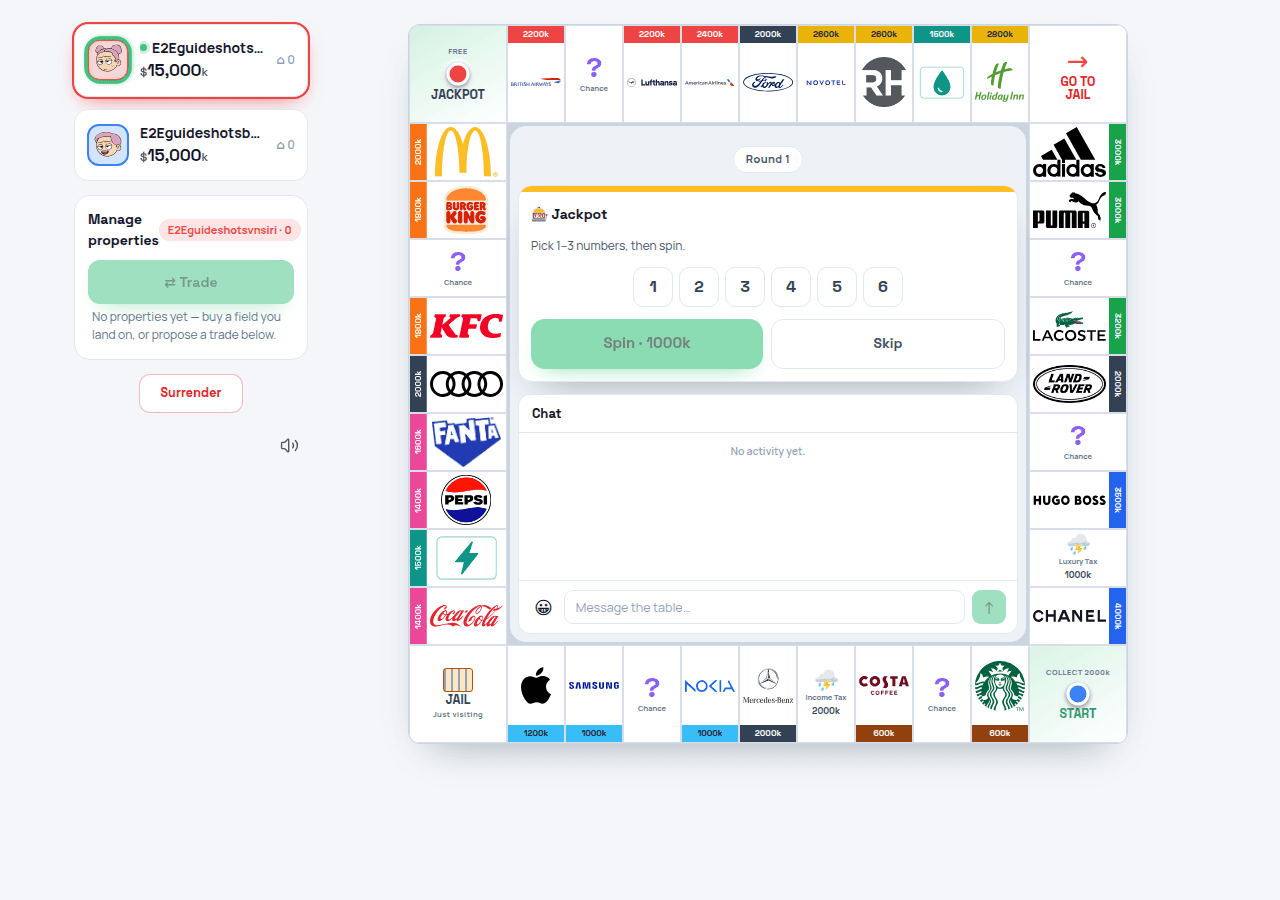
The third corner, square 20, is a dice bet rather than a rest stop. Land on it and you are offered a flat 1000 stake: pick one, two or three numbers from 1 to 6, and a single die is rolled.
Bots always decline, so the square only ever spends a human player's money.
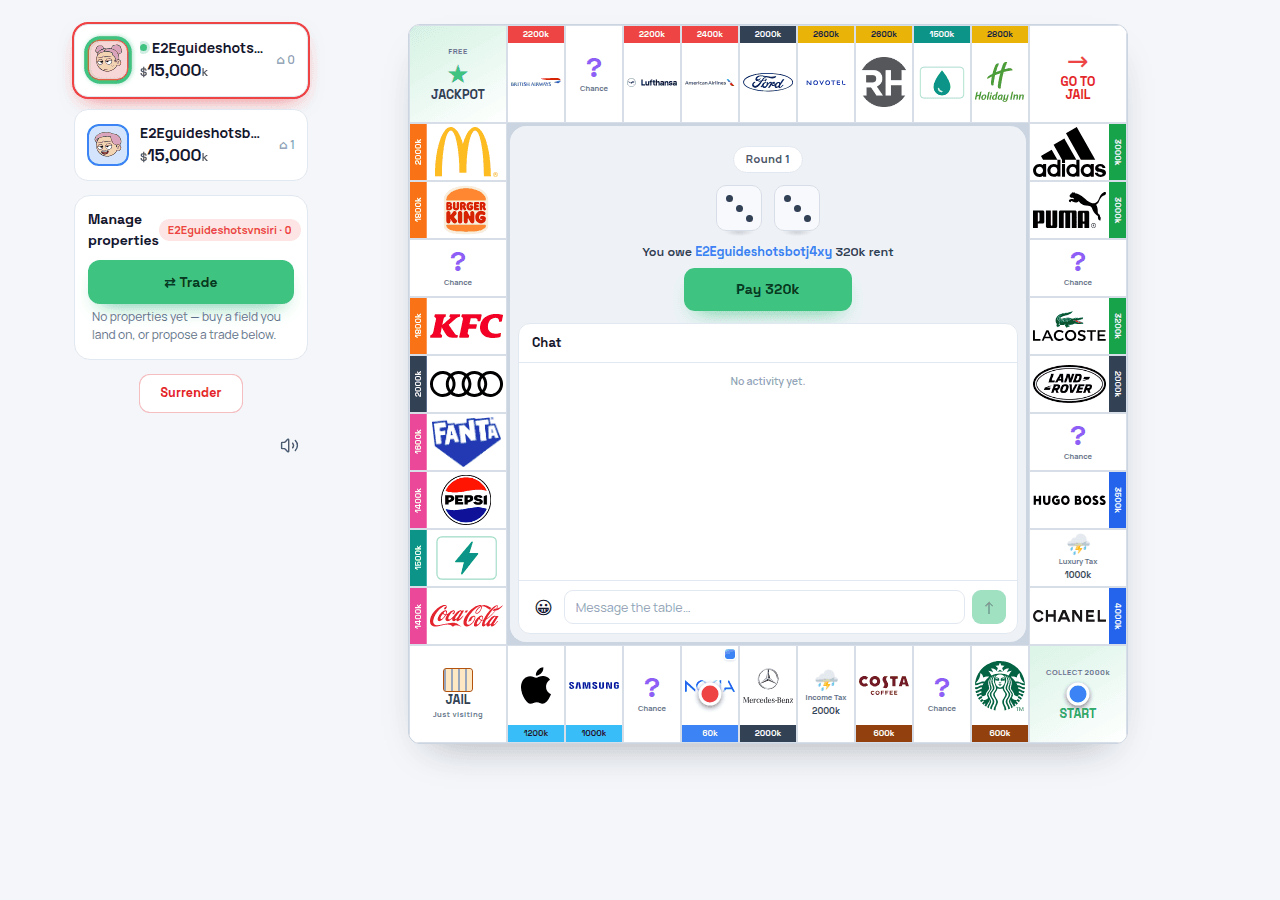
Rent is paid to the owner of the property you land on. Mortgaged properties charge nothing — and in Team mode an ally's property charges you nothing either.
Cards are the one thing you own outside a match that changes what happens inside one. Each card belongs to a specific field, and holding it raises the rent you charge when someone lands there.
Nothing else about a card touches the rules: they change no prices, no dice and no turn order.
To stop endless games, rent is taxed once a game runs long: a share is withheld from the owner and rises with the round, up to 99%. In Classic the tax starts at round 100 and maxes at round 200; in Speed it starts at round 40 and maxes at round 100. Taxes, Chance payments, and jail bail are never rent-taxed. Blitz ends at 25 rounds, long before either threshold, so rent is never taxed there.
Own every property in a colour group and you can build on them to raise rent (up to 5 buildings each).
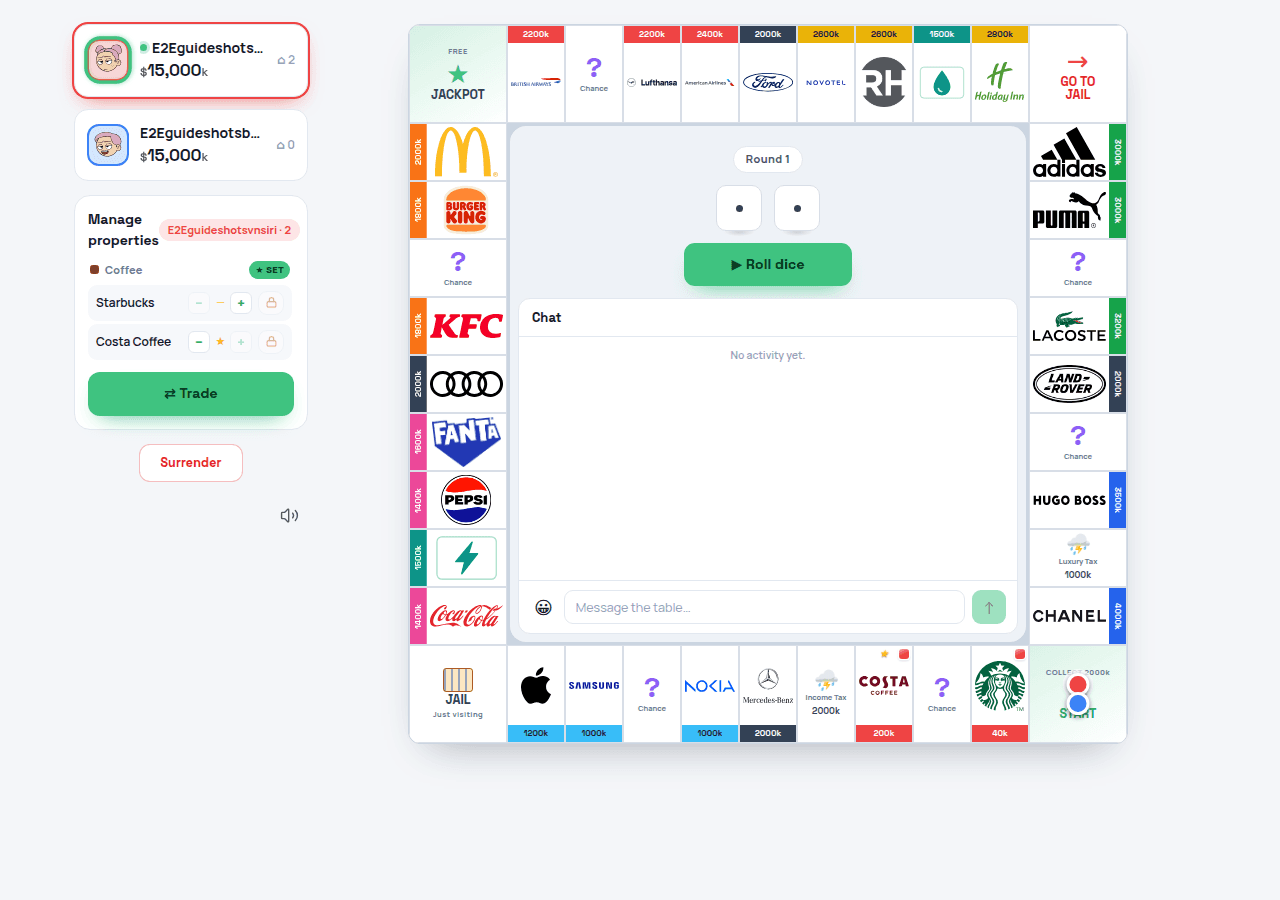
Need cash? Mortgage a property to the bank for half its list price; it then charges no rent. Buy it back for that half plus 10%. You must sell a group’s buildings before mortgaging any of its properties.
In Speed only, a mortgage is on a clock: if you don’t buy it back within 10 rounds the property is released to the bank and anyone can buy it again. You get a reminder on your turn each round. In Classic a mortgage never expires.
When you owe rent, tax, a Chance charge, or jail bail, the game pauses on a ‘Pay’ button instead of deducting silently.
Bankruptcy is only offered when even selling and mortgaging everything still can’t cover what you owe.
You go to jail on a third double, by landing on Go to jail, or from a Chance card. Jail does not cost anything to sit in, and there is no get-out-of-jail card in opolyx.
The 16-card Chance deck is shuffled: each draw is a random card from those not yet drawn, and every card comes up once before the deck starts over. Cards do one of:
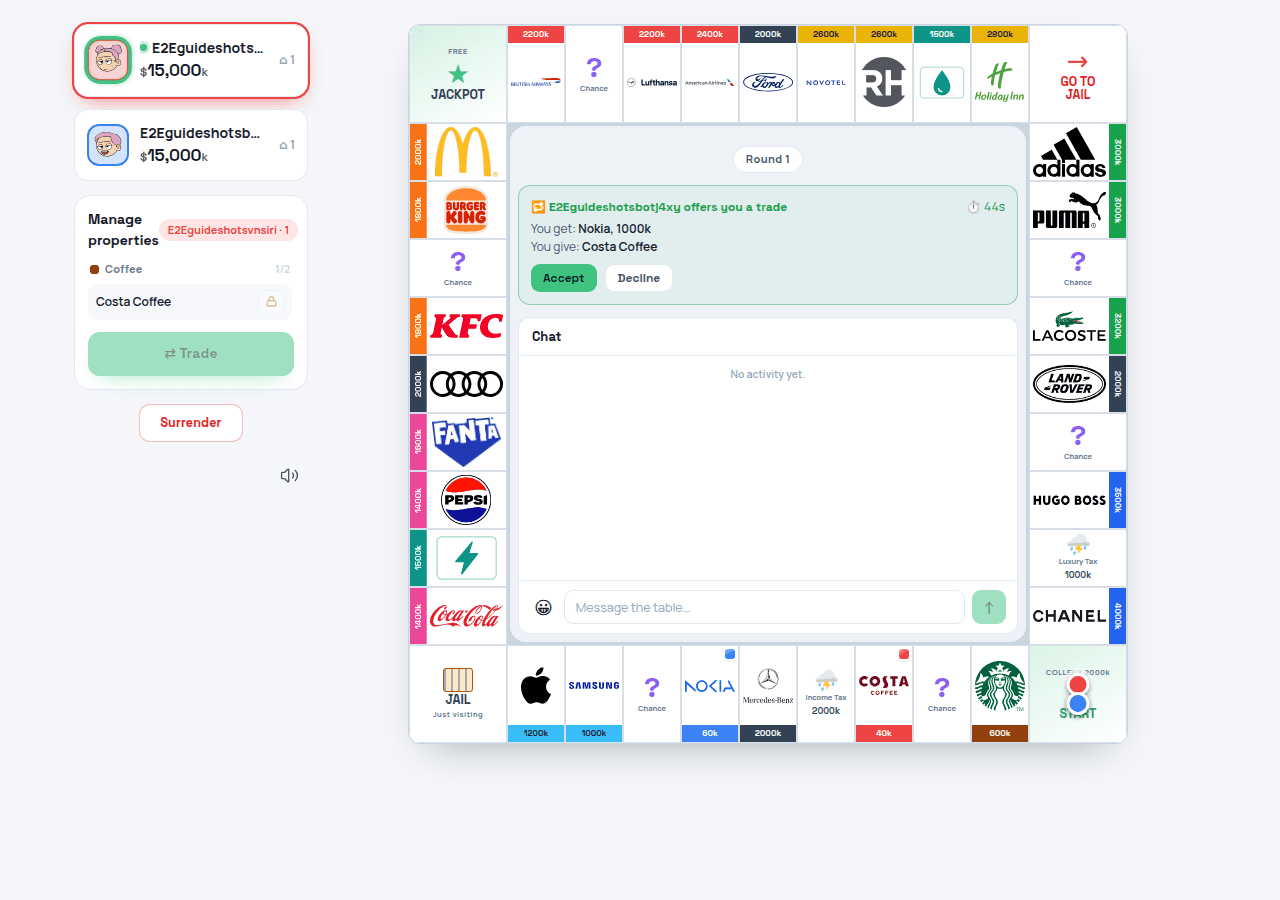
Trade cash and properties with another player to break a monopoly deadlock or raise cash.
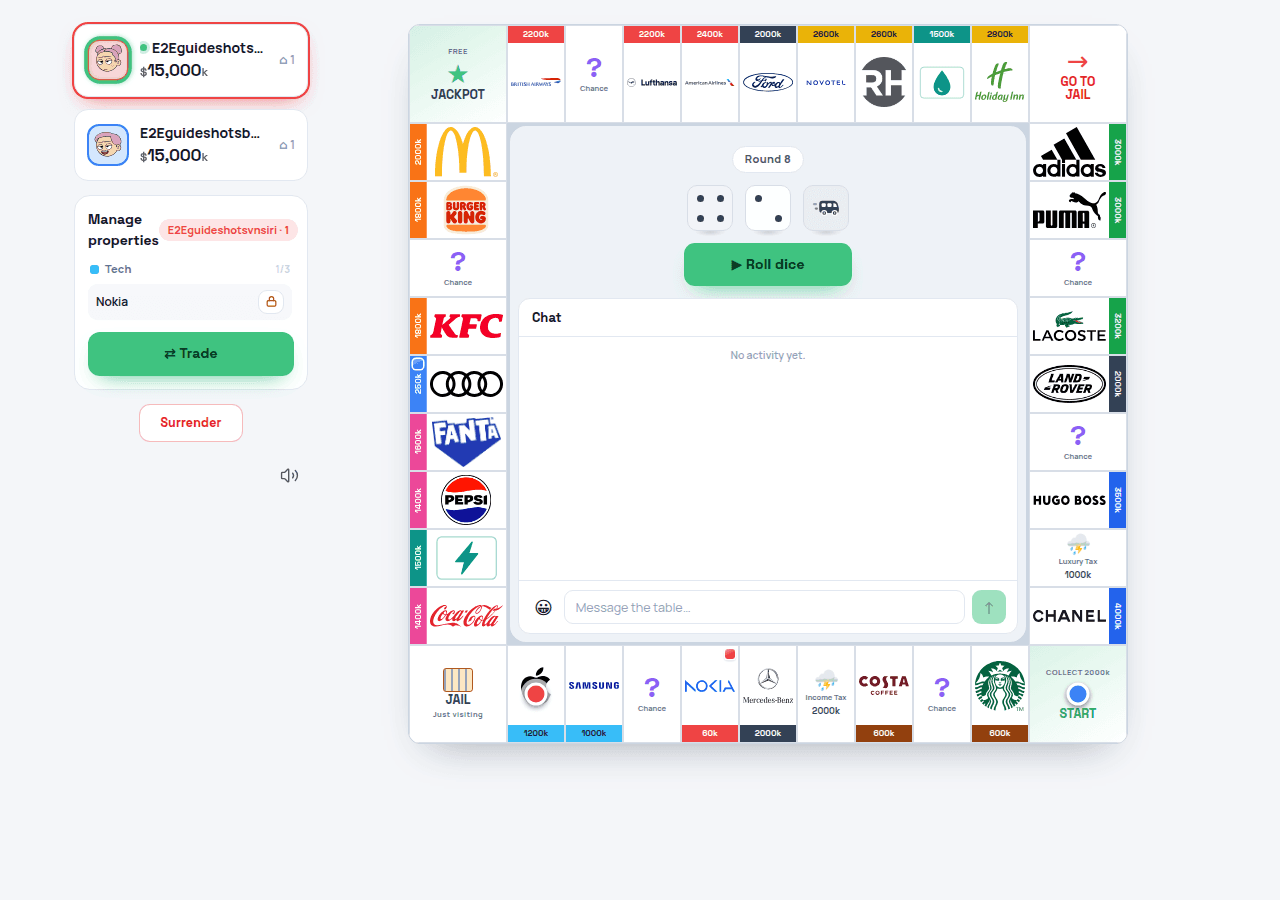
From round 7 in Speed, a third die rolls with the two white dice (never while in jail):
Every turn has a time limit so a game never stalls (about 75s in Classic, 45s in Speed; a payment pause always allows at least 75s).
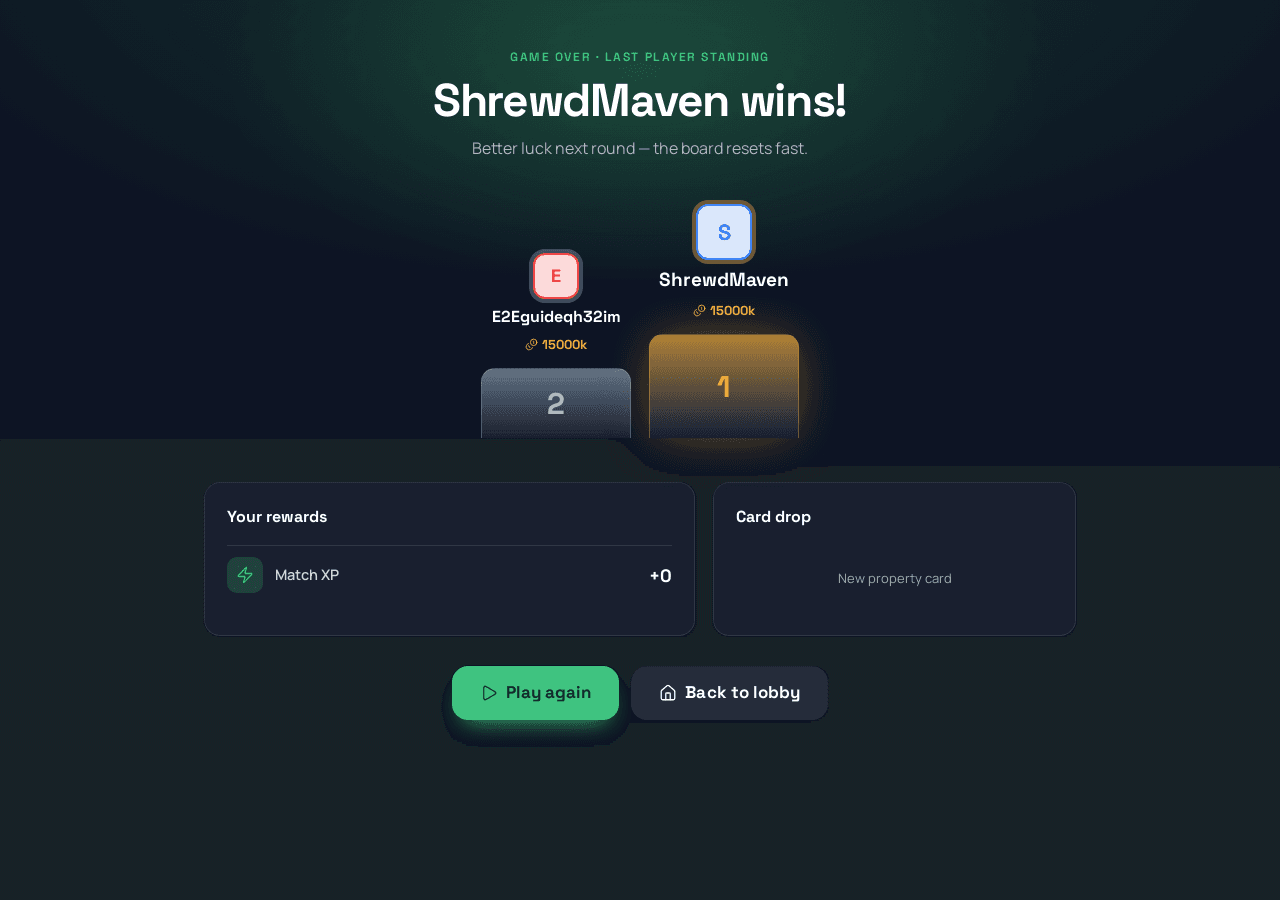
A game ends in one of two ways:
Edge cases the engine handles for you:
A few things the rest of this guide has not mentioned, none of them required to play: