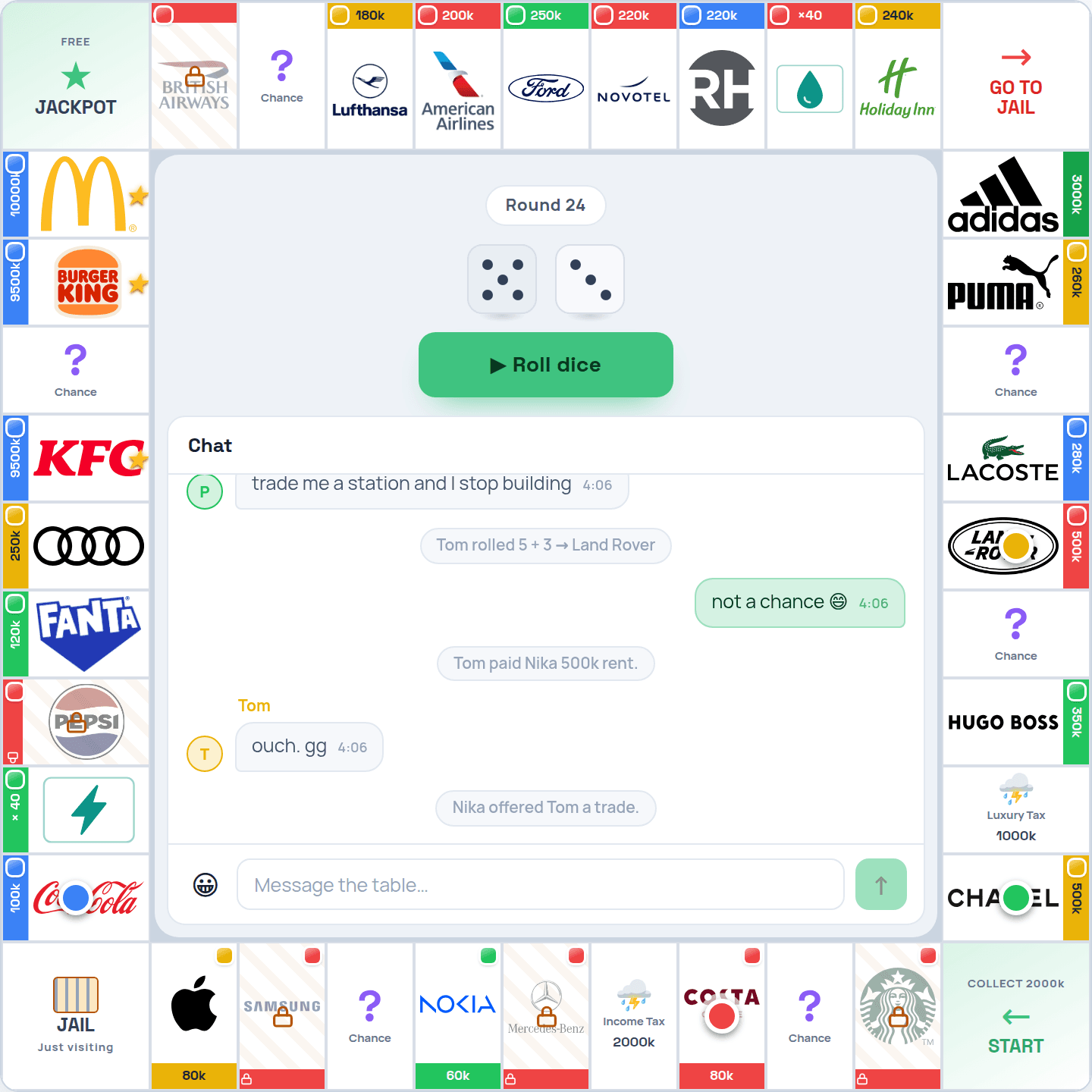
Every line of the action log, now in your language
The action log beside the board used to drop raw English words — “rent”, “bankrupt”, “last_standing” — into sentences in eleven languages. Not any more.
In plain words
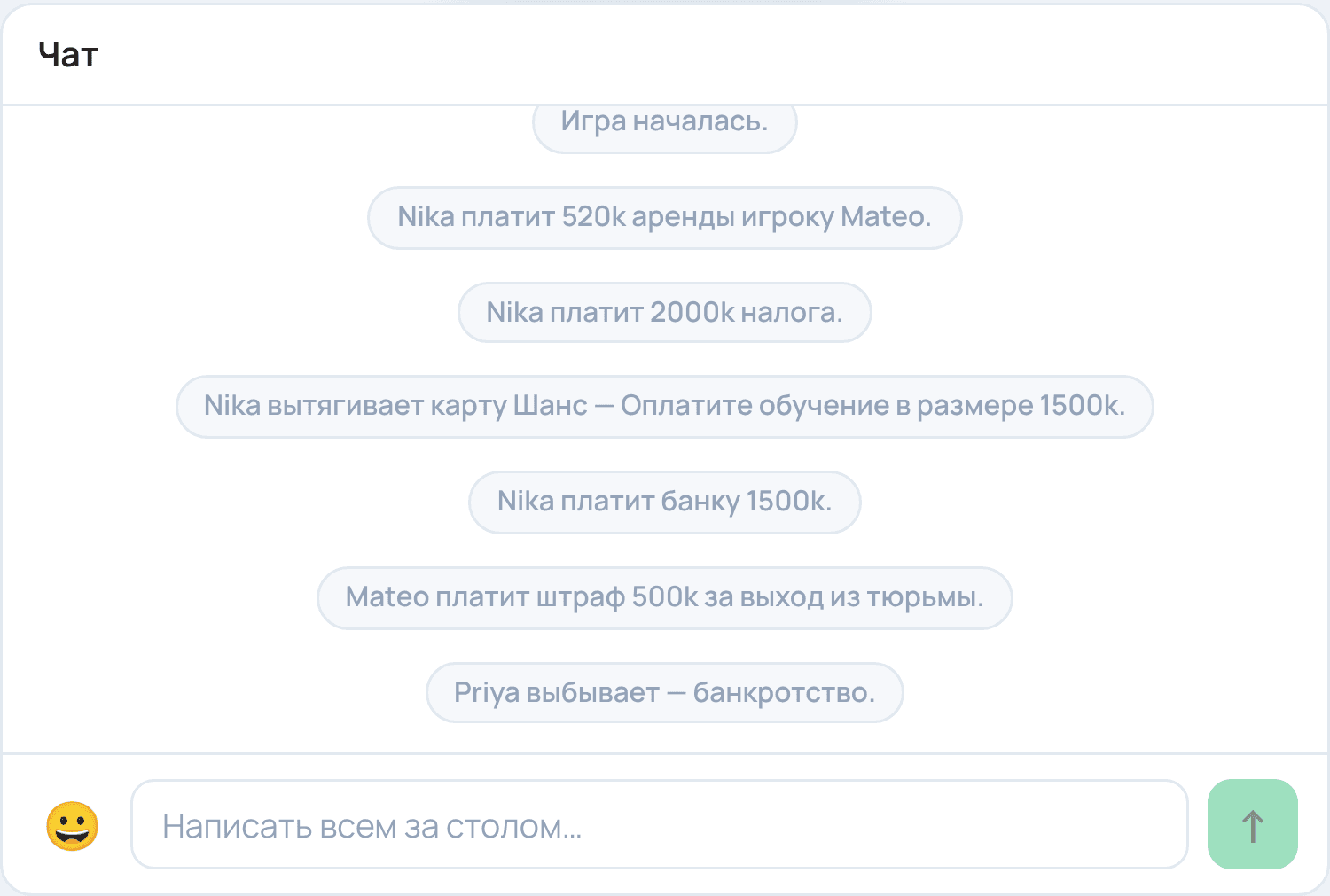
Picture a Russian line that ends “…заплатил Mateo 520k rent.” Everything is Russian except the last word, which drops in from English like a sticker nobody peeled off. That was the action log — the running commentary beside the board — in eleven of our twelve languages: on every rent, every bankruptcy and the last line of every game.
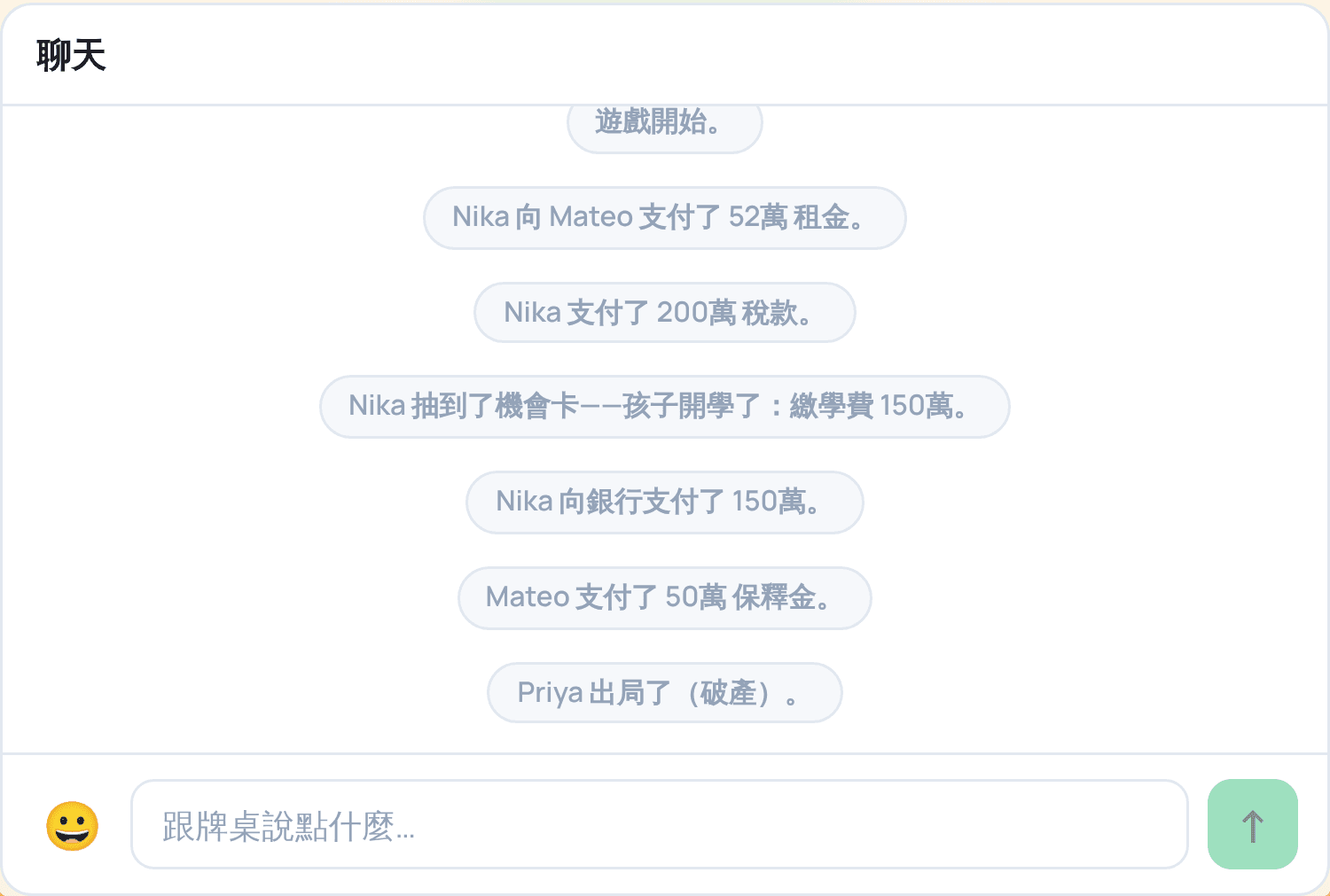
It was not a rare sight. Last week 1,161 people played opolyx, and 280 of them — about one in four — read it in a language other than English. More than half of those, 164 players, read Chinese: the very players the new Fortune board was made for. Every one of them met those stray words. They are gone now: every line is a whole sentence in the language you read.
Before and after
Three of those lines as the log used to print them, and as it prints them now:
| Language | Before | Now |
|---|---|---|
| Russian | Nika заплатил Mateo 520k rent. | Nika платит 520k аренды игроку Mateo. |
| Traditional Chinese | Nika 向 Mateo 支付了 52萬 rent。 | Nika 向 Mateo 支付了 52萬 租金。 |
| English | Game over — Nika wins (last_standing). | Game over — Nika wins as the last player standing. |
Questions people ask
Why did I see English words in the action log?
Every event in a game has an internal name in English — rent, bankrupt, last_standing. A few of those names slipped into the sentence the log wrote instead of being translated. Since 13 October every one of them is written out in your language.
Which languages does this cover?
All twelve the site speaks. English never had a stray word in the middle of a line — the word was English — but its end-of-game line said “(last_standing)” too, and that is fixed as well.
Did this change the rules or the amounts?
No. Only the wording of the lines changed. The money, the moves and the result are exactly as before.
Do replays and finished games read correctly too?
Yes. A line is put together when it is shown, not when the game is saved, so a replay, a spectator view and a game that finished long ago all read in your language now.
For the technically curious
The cause was a shortcut. The code that writes each line handed the engine’s own labels — the reason for a payment, the cause of an elimination, how a game ended — straight into the translated sentence. So eleven languages printed the raw label, and every language, English included, ended a game with “(last_standing)”.
Now each case is a sentence of its own in every language: rent, tax, bail, a bankruptcy, a surrender, and the three ways a game can end — the last player standing, the highest net worth when the round limit arrives, or a team win that names the team rather than one of its players. In English the rent line reads exactly as it did.
The Russian “you owe” panel had the same fault from the other side: it filled in the dictionary form of the word, so it read “Вы должны 520k аренда”. It now takes the right grammatical case — “за аренду”, “налога”, “по кредиту” — the way Spanish and French already did.