Knocked out early? You are no longer stuck watching
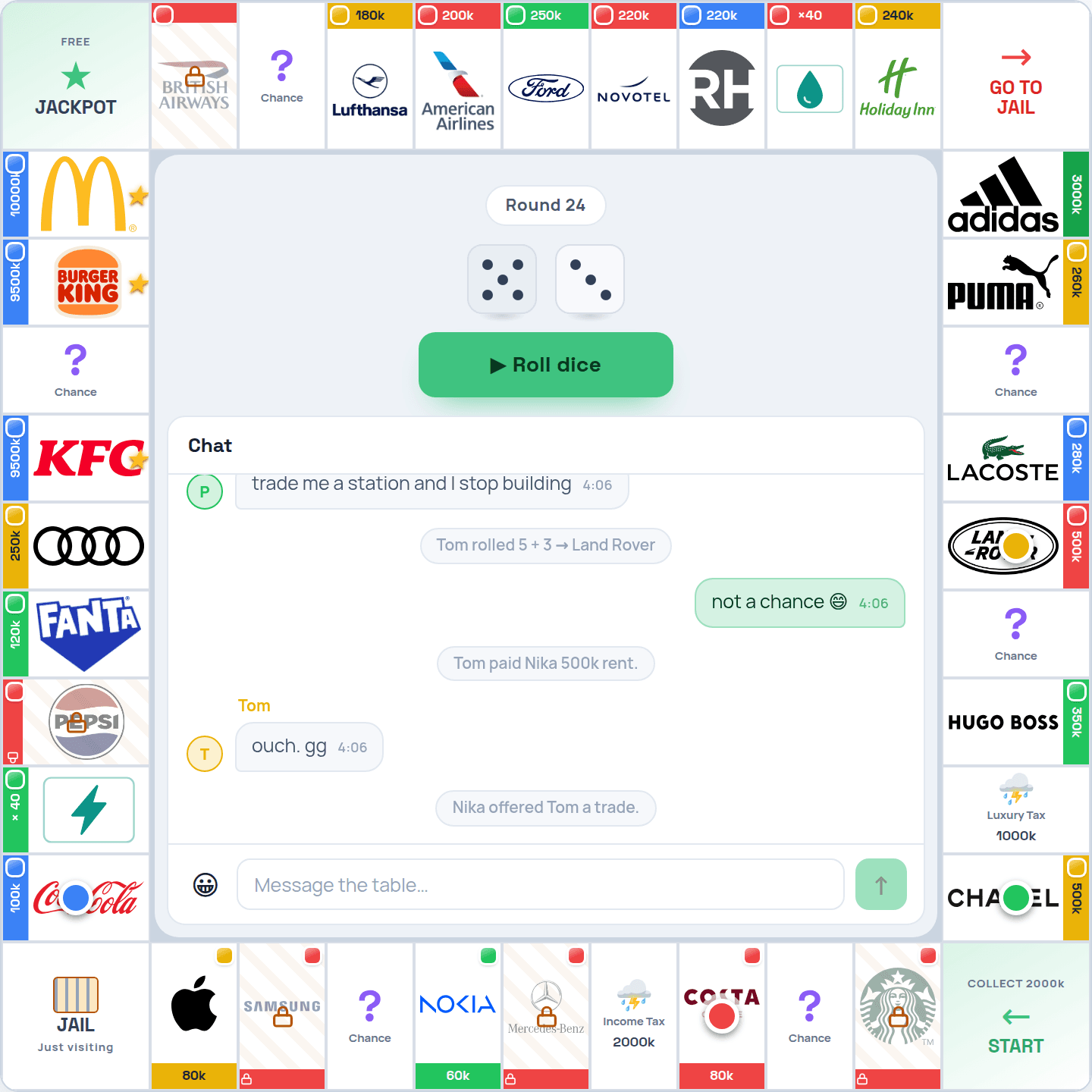
Going bankrupt used to leave you on a live board you could not touch, with no message and no way out, while the rest of the game played on for another ten minutes. Not any more.
In plain words
Being knocked out of a game of Monopoly is normal — it is how most games of it end for most people. What was not normal is what opolyx did next: nothing. The board stayed on screen, fully drawn and completely inert, every control greyed out. There was no message saying you were out, no summary of how you had done, and no button to leave. The one thing you could reasonably want at that moment — another game — arrived only when the players who were still in finished, which on a typical board was another ten minutes away and sometimes closer to forty.
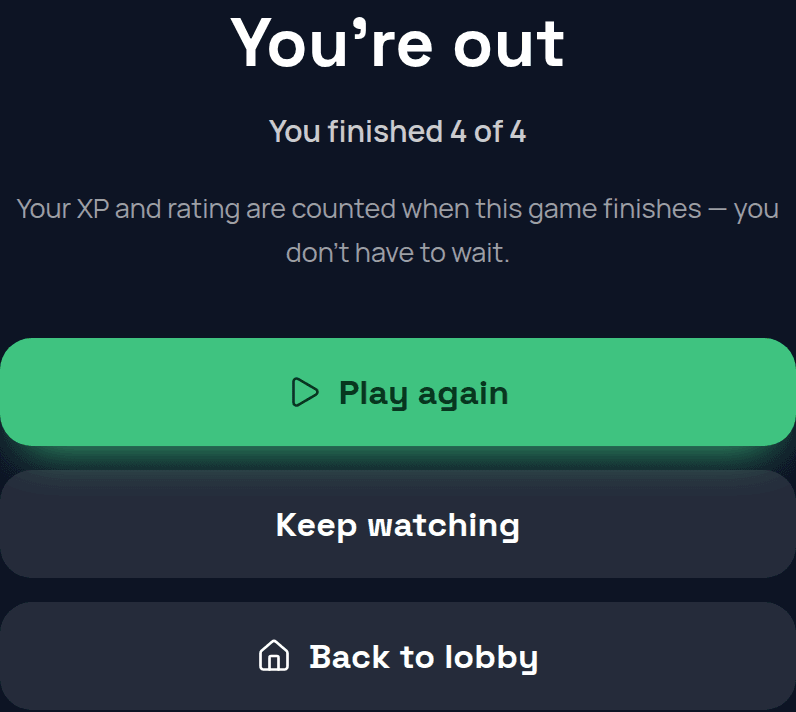
Now the moment your seat goes out you get a screen that says so, tells you the place you finished in, and offers a fresh game straight away. If you would rather see how it ends, "Keep watching" puts you back on the board with a small, permanent way out still on screen — and when the game does finish you are carried onto the real result screen without reloading anything.
The result screen picked up two things in the same change. It tells you which goal you are closest to finishing rather than listing them in menu order — offering "win a game" to somebody who has just been bankrupted is not encouragement — and it shows your win streak when you are on one. The buttons also moved directly under the podium, because on most laptops they had been sitting below the fold: the first thing you saw after a game was a podium and a stack of reward cards, with nothing to press anywhere on screen.
For the technically curious
This moment is worth fixing because of where it sits. Whether somebody ever returns to opolyx is decided almost entirely by how many games they play on their first day, and the jump is steep: one game and they very rarely come back, three and it is close to a coin flip. About two thirds of newcomers play exactly one game on day one. So the highest-value thing the site can do is make the second game easy to start — and the largest single group of people in a position to start one are players who have just been knocked out of the first.
| Games played on day one | Came back another day |
|---|---|
| One | 9% |
| Two | 25% |
| Three or more | 47% |
The reason nobody noticed is a small piece of logic reading exactly backwards. Whether the leave control renders is decided by "the game is running, you are in it, and you are not eliminated" — a sensible-looking condition that hides the exit from precisely the player who has finished playing. Meanwhile the result screen only renders once the game itself is over. Between those two rules sits a player with no controls, no summary and no way out, and no code path that addressed them at all.
The screen deliberately shows no XP, no rating change and no level bar. Those are all written when the game finishes, not when a seat goes out, so at this point in time they do not exist yet — rendering them would print a match reward of zero to the player being told they are out. Predicting them was possible and was rejected: it means duplicating the server’s arithmetic in the browser with no test spanning both. One line says the reward is counted when the game ends, which is true and answers the question that is actually being asked.