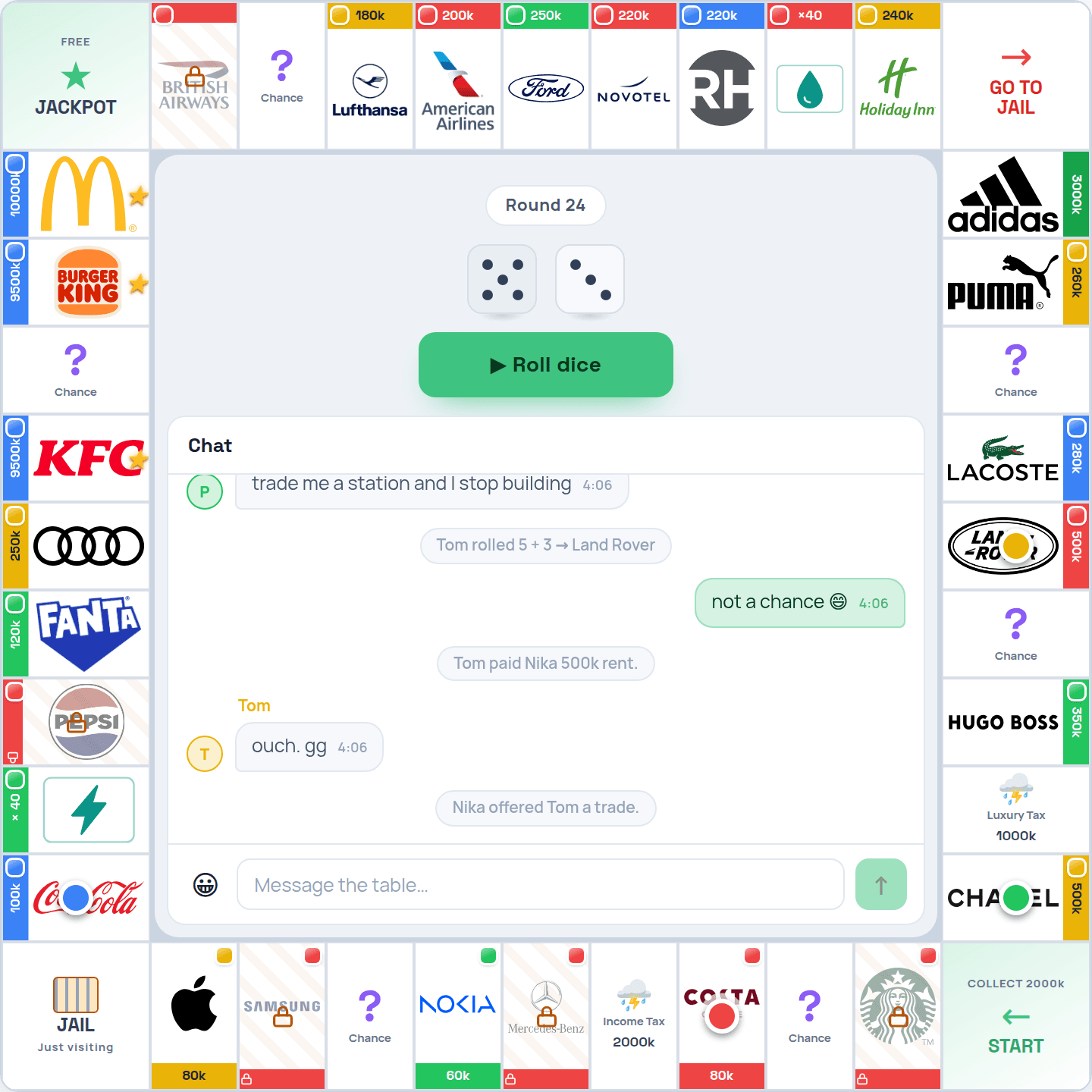
opolyx now speaks German and Traditional Chinese
Two more languages, bringing the site and the game to twelve. Traditional Chinese is written for Taiwan rather than converted from the mainland version, which turned out to matter more than expected — a converted page can be perfectly spelled and still say the wrong thing.
In plain words
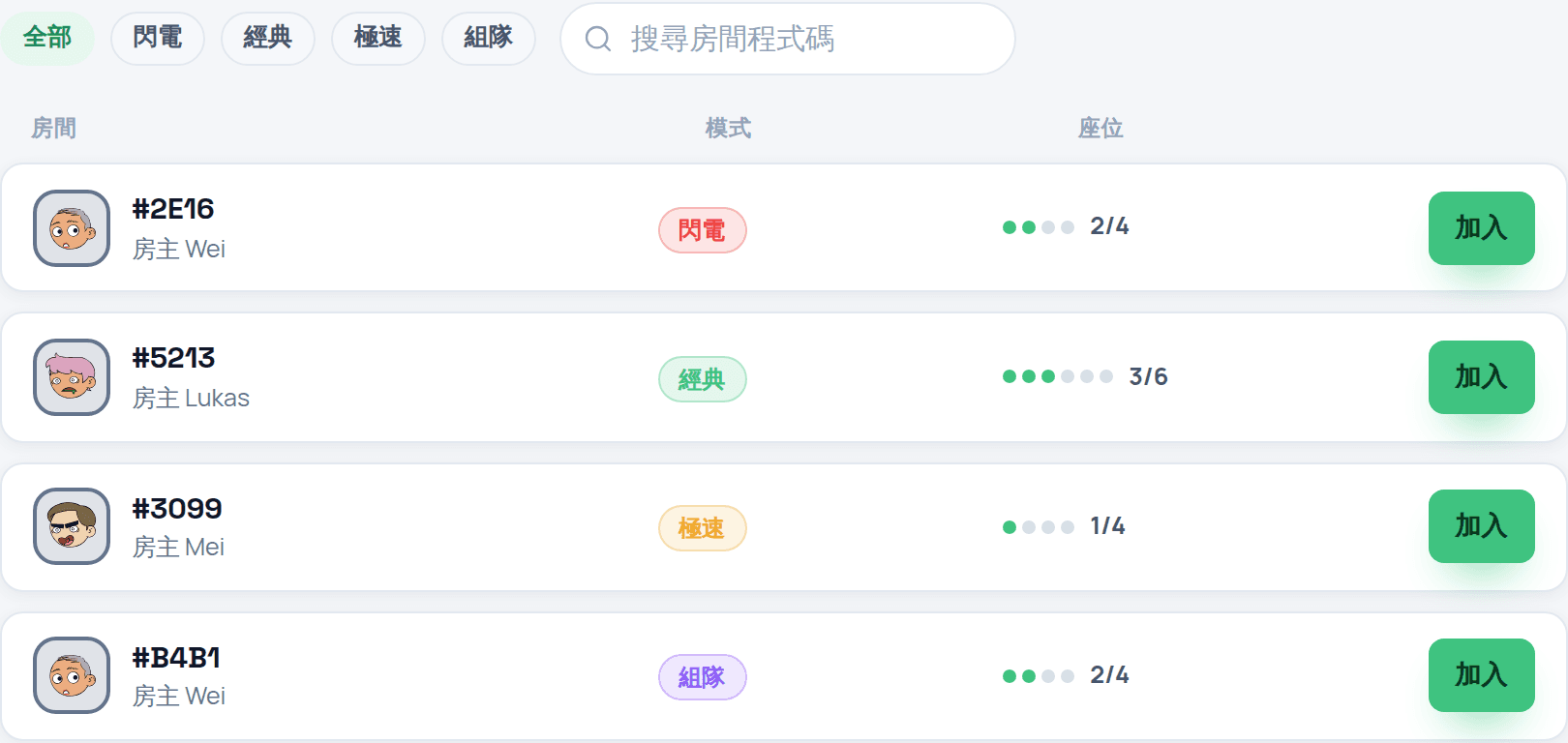
German and Traditional Chinese are now complete: the lobby, the board, the rulebook, the guide, the legal pages, every product update and every landing page. That takes opolyx to twelve languages end to end. If your browser asks for German, or for Chinese as it is written in Taiwan and Hong Kong, you get that from the first page load without changing a setting.
Traditional Chinese could have been produced by running the Simplified version through a converter, and at first that is what it was. The problem is that a converter changes the letters and not the words. Taiwan does not merely spell things differently; it often uses a different word. Online multiplayer was 聯機 — correct characters, mainland vocabulary; Taiwan says 連線. A hotel was 酒店, which in Taiwan reads as a hostess bar, on a board reference page and inside a property group's own name. The whole locale has been read through and rewritten in the vocabulary a reader in Taipei actually uses.
For the technically curious
The uncomfortable part is that not one of the Chinese defects could have been caught by a test, because every one of them was valid Traditional script that simply said something else. The converter has to guess when one Simplified character maps to several Traditional ones, and it kept guessing wrong in the same place: 只 is both "only" and the counter for animals, and it chose the animal every single time the adverb was meant. Elsewhere 發送 (to send) became 髮送, where that character means hair, and 分鐘 (minute) became 分鍾, where it means devotion. Spelling checks pass. Structure checks pass. A reader stops dead.
| Was | Now | Why |
|---|---|---|
| Online multiplayer | 聯機 → 連線 | zh-Hant |
| Hotel | 酒店 → 旅館 | zh-Hant |
| Countdown | 倒計時 → 倒數計時 | zh-Hant |
| Full screen | 全屏 → 全螢幕 | zh-Hant |
German needed the opposite treatment, and the contrast is the useful part. It was written rather than converted, so it arrived with no leftover English and consistent terminology — and the read found twenty-seven lines to fix against Traditional Chinese's two hundred and thirty-two. Among them: a compound verb that is not a German word, an invented noun, a verb used without the object it requires, and eleven page titles saying "gratis" where "kostenlos" reads better — a change that could not be made by find-and-replace, because one of those words declines and the other does not.
One more thing was quietly missing. When a page is shared to a chat or a social network, the preview picture comes from a per-language card, and the two new languages had no card — not a fallback to the English one, an actual missing file, referenced by every page in those languages. Both now exist, and the Traditional Chinese one is rendered in a Taiwanese typeface rather than a mainland one, because the letterforms genuinely differ.