For Chinese-speaking players: WeChat Pay and red envelopes
If you read opolyx in Chinese, two things changed on 4 October. VIP can now be paid for with WeChat Pay, on the same checkout and at the same price as a card. And the Chance card you draw arrives as a red envelope, its texts rewritten for Simplified and for Traditional Chinese.
In plain words
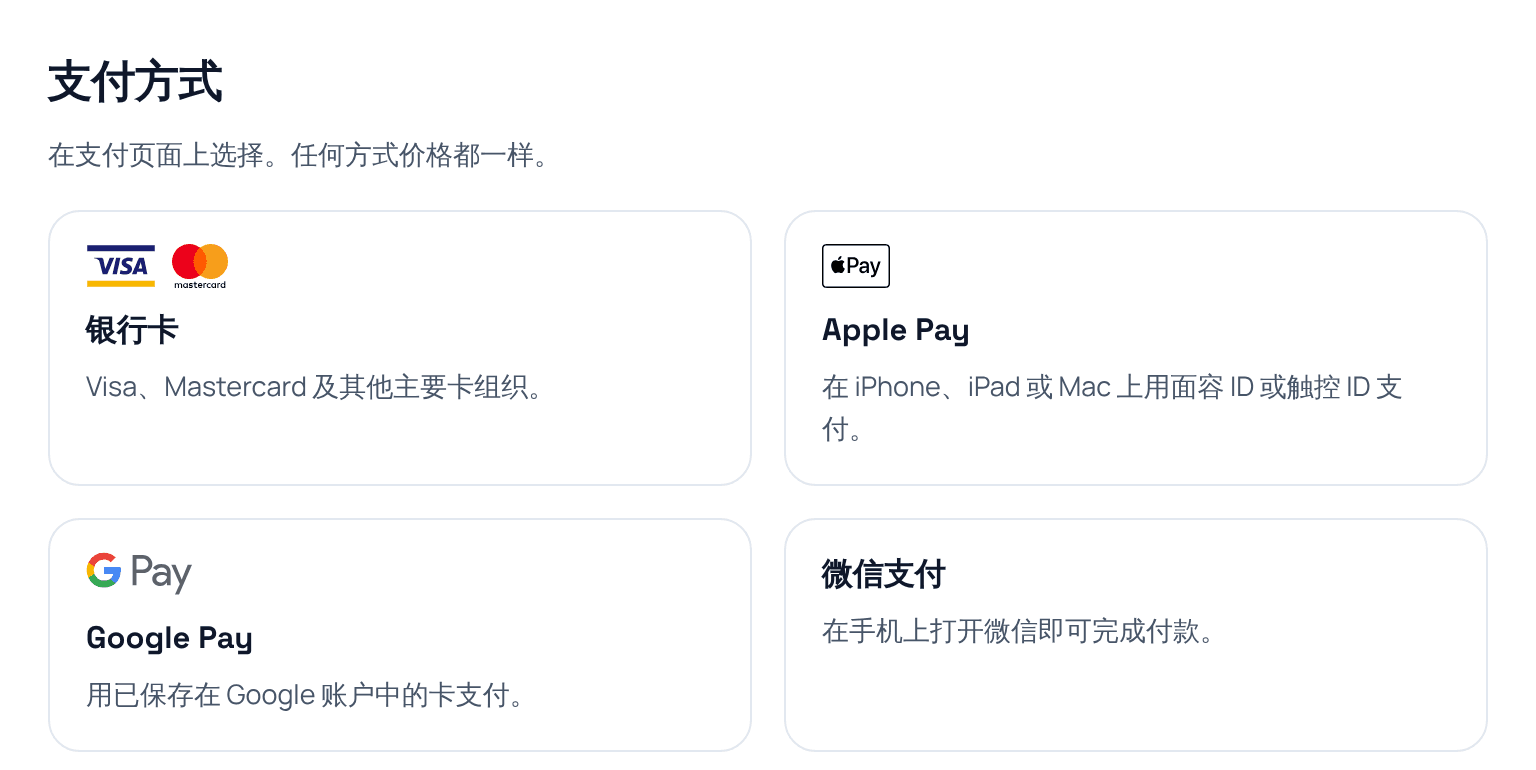
VIP is the one thing opolyx sells: $2.99 for 30 days, and with it a bank that will lend you money in the middle of a game. Players who read opolyx in Chinese are some of the most dedicated we have — on average they finish 5.3 games each, against 3.8 for everyone else — and yet very few of them had ever got as far as paying. A card is often turned down by a shop in another country, and a great many Chinese-speaking players simply pay with WeChat. So WeChat Pay now sits beside the bank card, Apple Pay and Google Pay on the same checkout.
Nothing else about the purchase changes. The price, the 30 days and who you pay — Dodo Payments, our payment partner and the seller of record — are exactly what they are for a card. On the Simplified Chinese site the Buy button now says so outright: 微信支付或银行卡, “WeChat Pay or bank card”.
The Chance card becomes a red envelope
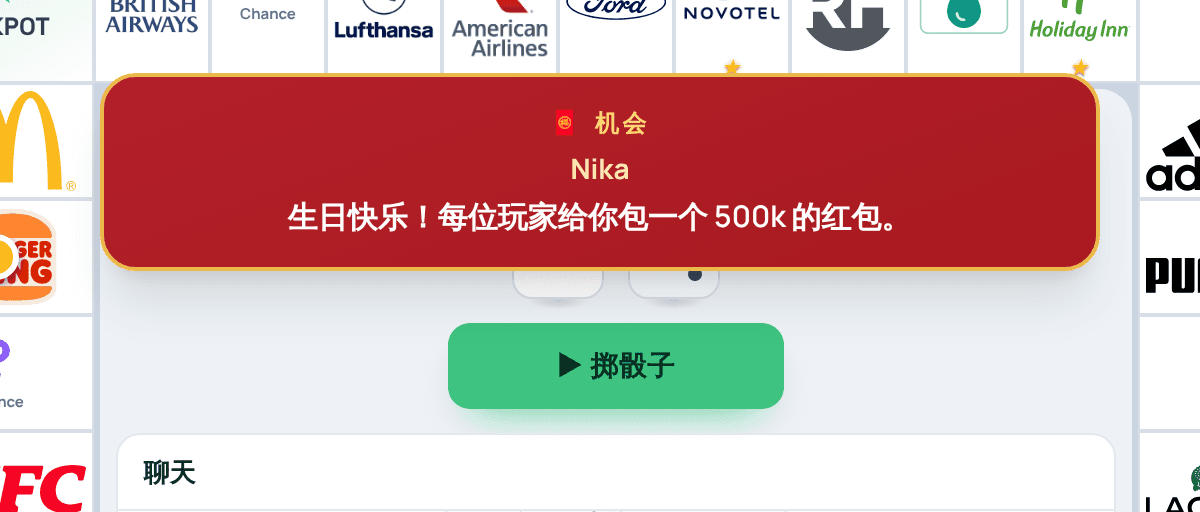
The second change is at the table. On a page in Chinese — Simplified or Traditional, in any game — the Chance card is drawn as a red envelope: red, with a gold border, and 🧧 where the question mark used to be. Every Chance text was rewritten as well, in the spirit of 大富翁, the property-trading board game that generations of Chinese players grew up with. The birthday card, for one, now has every player hand you a red envelope.
Questions people ask
Can I pay for opolyx VIP with WeChat Pay?
Yes. Since 4 October 2026 WeChat Pay sits beside bank cards, Apple Pay and Google Pay on the same checkout, and VIP costs $2.99 for 30 days whichever way you pay.
Does WeChat Pay cost more than a card?
No. The price is set in US dollars and is the same for every way to pay: $2.99 for 30 days.
Who processes the payment?
Dodo Payments, our payment partner. It is the seller of record for the purchase, just as it is when you pay by card.
Why does my Chance card look like a red envelope?
Because you are reading opolyx in Chinese, or playing in a Fortune room. On a page in Simplified or Traditional Chinese the Chance card is drawn as a red envelope; switch the site to another language and it is the ordinary card again — except in a Fortune room, where everyone gets the envelope. The rules and the money are the same either way.
For the technically curious
WeChat Pay rides on the checkout that cards already use. When the server opens a checkout for you, it asks Dodo Payments for WeChat Pay alongside the card types — and if that request were ever refused, it tries once more without WeChat Pay, so a card payment can never be blocked by it. The price is fixed in US dollars, and a purchase is confirmed by checking the amount, never the way you chose to pay, which is why adding a way to pay cannot change what VIP costs.
| Before 4 October | Now | |
|---|---|---|
| The Buy button on the Simplified Chinese site | 银行卡支付 — $2.99 | 微信支付或银行卡 — $2.99 |
| The Chance card on a page in Chinese | A white card with a question mark | A red envelope with a gold border |
| Chance texts in Chinese | Translated from English | Rewritten, separately for Simplified and for Traditional |
The two scripts were written separately rather than converted from one another: the Traditional texts use the words a reader in Taiwan would use, not a character-for-character copy of the Simplified ones. The envelope’s colours were checked against the text printed on them — white at 6.6:1 and the gold title at 4.9:1, both comfortably above the accessibility threshold for text that size.
Why the language and not the country? Chinese is read in Singapore, Malaysia, Taiwan, Hong Kong and all over the world, and the language of a page is not a nationality. So the envelope is the only thing tied to it, and it is purely pictures and words: nothing about the rules, the prices or the money depends on the language you read.