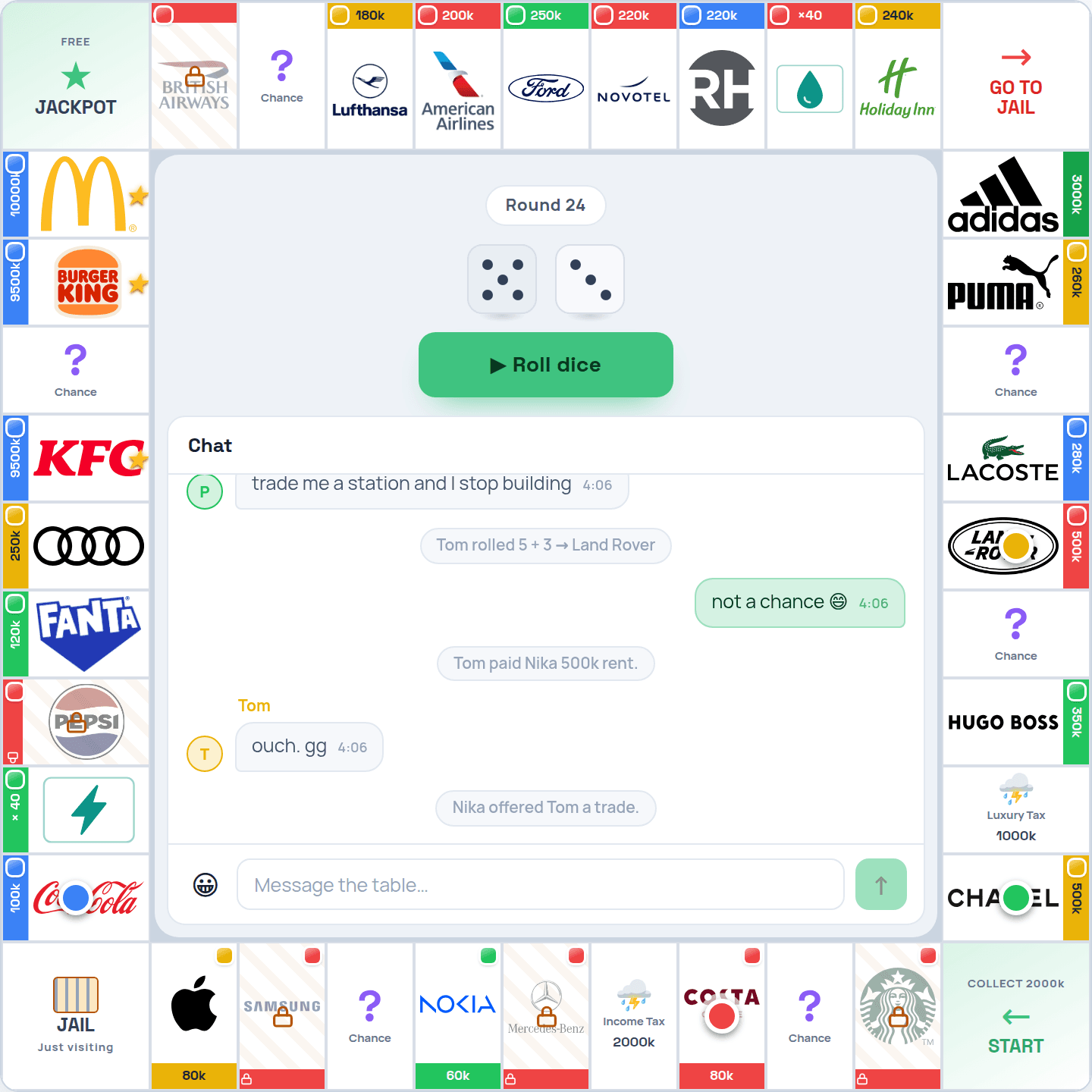
Com sorte hoje? O minijogo de dados do Jackpot
Caia na casa do Jackpot para jogar uma aposta rápida nos dados — escolha alguns números, faça sua aposta e vá atrás de um prêmio que, na média, é justo.
Em palavras simples
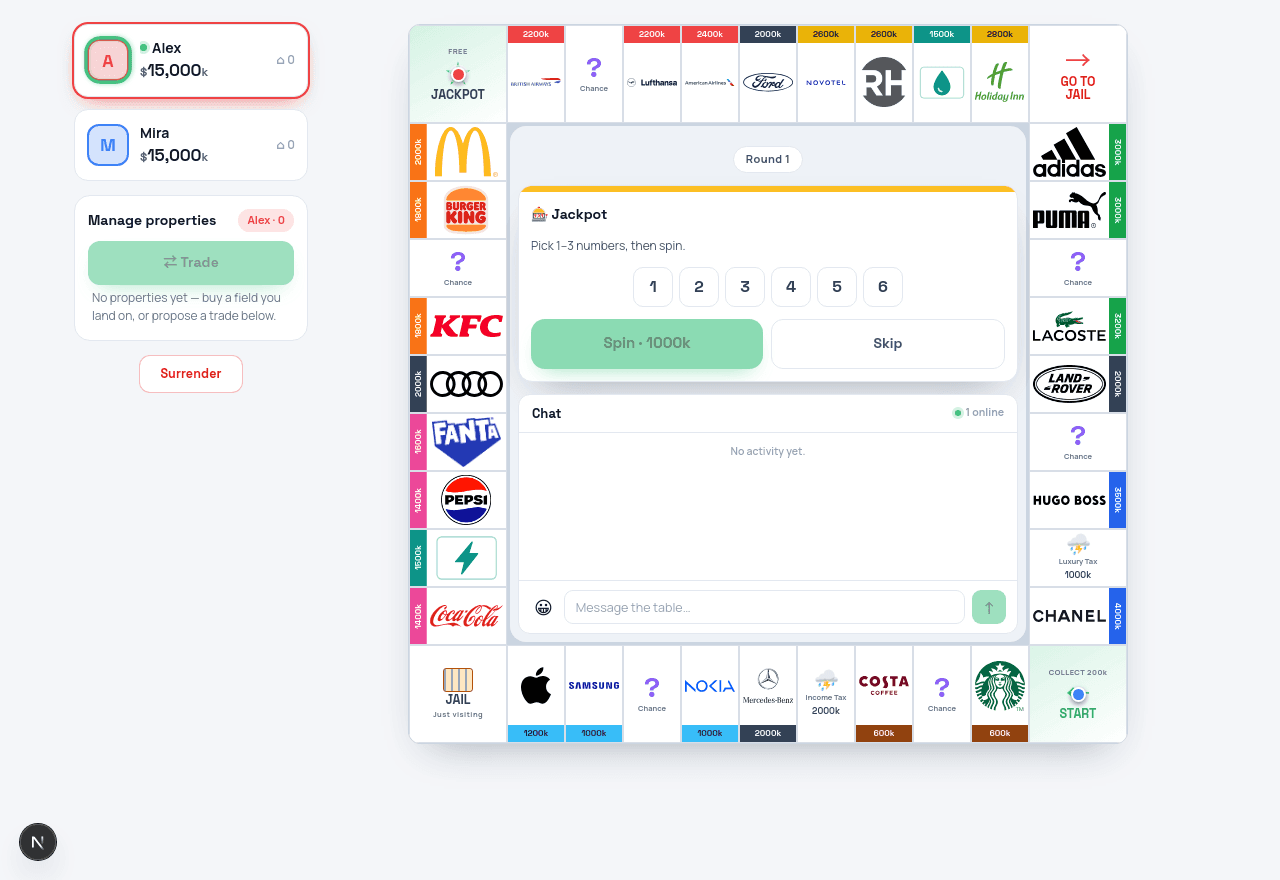
A casa do Jackpot (a casa 20) antes não fazia nada — você caía nela e simplesmente encerrava seu turno. Agora ela abre um joguinho rápido de dados, e você decide se vai jogar.
Escolha um, dois ou três números de 1 a 6, pague uma aposta fixa de 1000 e jogue um único dado. Se o dado mostrar um dos seus números, você ganha — e quanto menos números você apostar, maior é o prêmio.
- Aposte em 1 número — um acerto paga 6000.
- Aposte em 2 números — um acerto paga 3000.
- Aposte em 3 números — um acerto paga 2000.
- Sem clima? Recuse e encerre seu turno de graça — você só é cobrado quando gira.
| Números que você escolhe | Aposta | Um acerto paga | Chance de acertar |
|---|---|---|---|
| 1 número | 1000 | 6000 | 1 em 6 |
| 2 números | 1000 | 3000 | 2 em 6 |
| 3 números | 1000 | 2000 | 3 em 6 |
Com pouco dinheiro? A janela abre mesmo assim para você ver a aposta, mas você não pode girar até conseguir cobrir a aposta. A maioria dos bots passa, então o Jackpot é quase sempre decisão sua.
Para os mais técnicos
A mecânica é deliberadamente neutra em valor esperado (EV): para qualquer quantidade de escolhas k, a chance de acertar é k/6 e o prêmio é 6000/k, de modo que a variação de dinheiro no longo prazo é exatamente zero.
// reduce.ts — bank-funded, fair on the distribution
const JACKPOT_STAKE = 1000;
const JACKPOT_PAYOUT = { 1: 6000, 2: 3000, 3: 2000 };
// EV per spin, for k = 1, 2, 3:
//   (k / 6) * (6000 / k) - 1000 = 0
Cair na casa do Jackpot agora encaminha para uma nova fase pending_jackpot, com duas ações: place_jackpot_bet (valida de 1 a 3 números distintos, desconta a aposta, joga e aplica o líquido) e skip_jackpot (sem cobrança). Como a aposta garante que um erro nunca fique negativo, não há caminho de pagamento nem de falência.
Foi lançado sem nenhuma migração de banco de dados. A fase e o estado pendente vivem no engine_state em JSON, as ações não são restringidas por enum, e o evento jackpot_won já existente é reutilizado para cada aposta resolvida — ganha ou perdida — diferenciadas por uma flag won no payload.