Back at the table in one tap
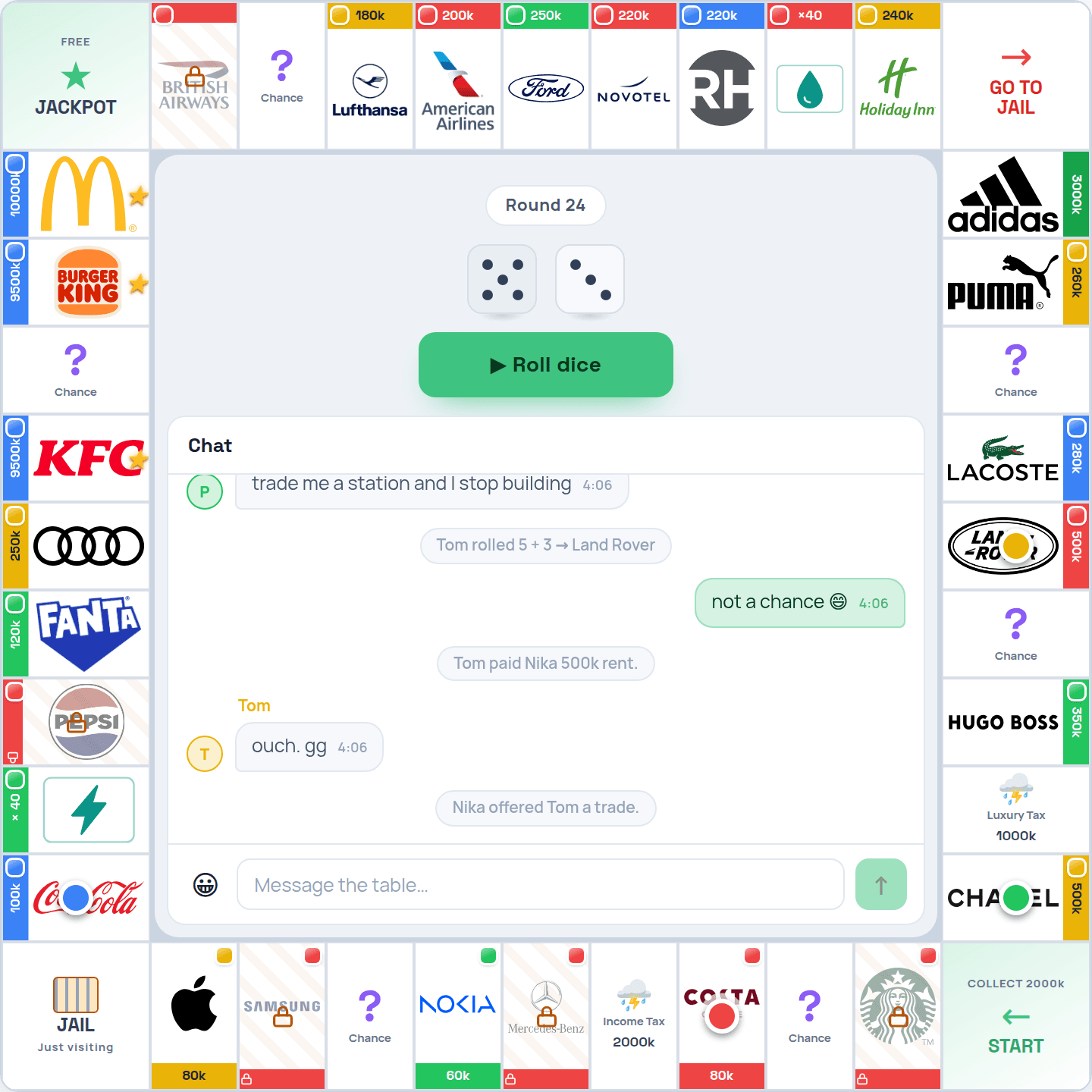
The result screen can now start the same game again, and Quick match puts you in a room that is already filling up instead of opening another empty one.
In plain words
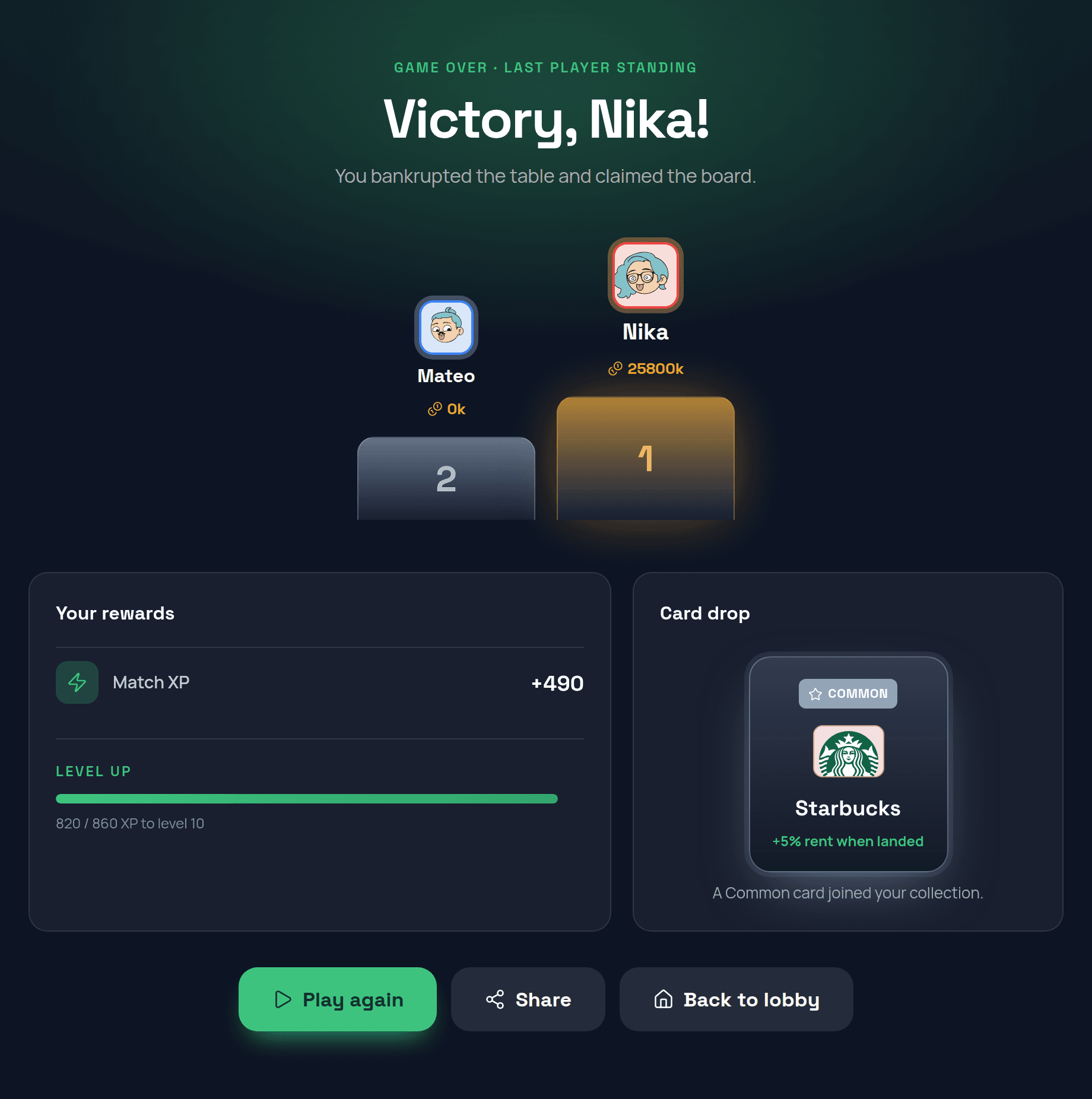
The best moment to start a game is the second the last one ends. We had the evidence and were throwing it away: of the players who came back for a second game, more than half started it within two minutes of the first one finishing — and all we offered them at that moment was a link back to the lobby, where they had to pick a mode, pick a seat count, create a room and wait.
Now the result screen has a Play again button. One tap and you are in a new game: the same mode, the same number of seats, the empty chairs already filled, and the game already running. No lobby, nothing to configure.
Quick match is the other half of the same problem, in the lobby. It used to be a button that did nothing. Now it puts you into the best open room of the mode you picked: one hosted by a real person first, then the one closest to starting, then the one that has been waiting longest. Only if there is genuinely nothing to join does it open a room for you.
For the technically curious
Rematch adds no new server endpoint. It does exactly what a player does by hand — create the room, seat the bots one at a time (the call picks the next free chair, so doing them in parallel would race for the same one), then start it — and every step is authorised as the player, so every rule that applies to a room you make yourself applies here too.
That matters because of who presses the button. Nine out of ten first-game exits are surrenders, not bankruptcies, so the usual case is a player leaving a game that is still running for everybody else. It works because a player who is out of a game no longer counts as being in one — a rule that shipped for a different reason two months ago, and is now what makes the rematch button legal.
Quick match keeps its decision in a pure function, so it can be tested without a lobby or a database. The mode is a filter rather than a preference: being dropped into a half-hour Classic game after choosing Blitz would be worse than waiting a moment.
// lib/lobby/quickMatch.ts — which open room to try, in order
.sort((a, b) => {
  // 1. a human host: pool the people who are actually online
  if (a.creator_is_bot !== b.creator_is_bot) return a.creator_is_bot ? 1 : -1;
  // 2. fewest free seats: a nearly-full room starts sooner
  const freeA = a.max_players - a.player_count;
  const freeB = b.max_players - b.player_count;
  if (freeA !== freeB) return freeA - freeB;
  // 3. oldest: whoever has waited longest gets company first
  return Date.parse(a.created_at) - Date.parse(b.created_at);
});
The full ranked list is returned rather than a single pick, because the seat counts are a snapshot: the caller walks down the list until a join actually succeeds, which is what stops two people racing for the last chair from both ending up alone.